
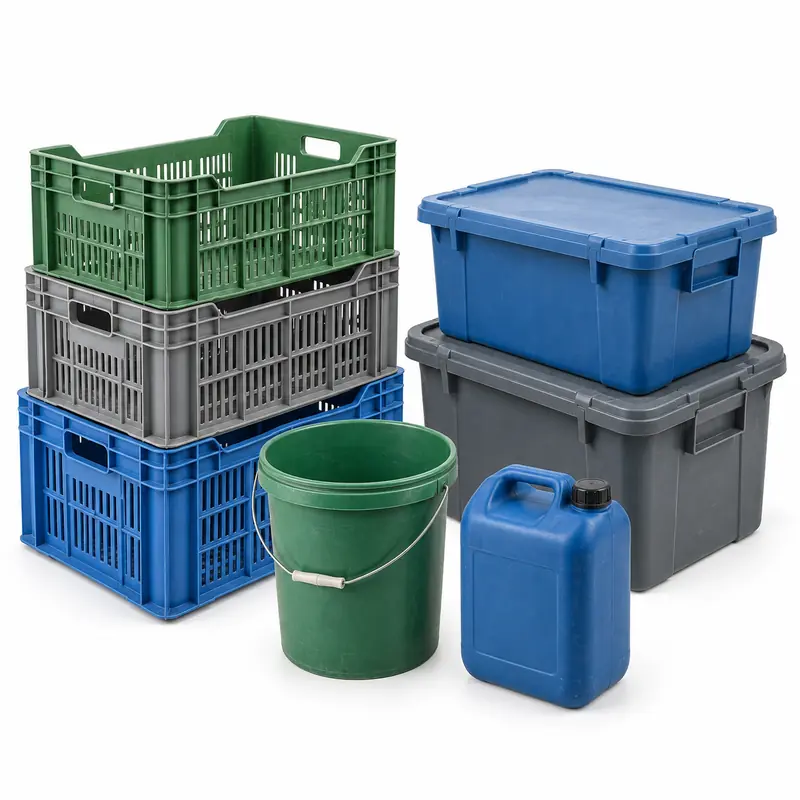
Plastic Crates and Containers Guide for Gharuan, Kharar
This plastic crates and containers guide for Gharuan, Kharar covers the disclosed item or material lot: Count crates, tubs, bins and other forms separately. List crates, tubs, bins and other containers by recognisable groups, approximate count and size. State safely visible material markings where present rather than assuming every crate is one polymer. Identify lids, inserts and other parts actually included. A returnable commercial crate, a clean household tub and a container with unknown previous contents require different ownership and acceptance questions.
Choose an available material guide for classification and the locality hub for address, ownership and handover planning. Gharuan address and handover guide, Plastic Scrap, Cardboard Scrap, Rubber and Tyre Scrap, Wire and Cable Scrap, Plastic Crates and Containers, General category guide, and Offer-factor guide. Acceptance depends on the material type, condition, quantity, collection address and selected buyer.
Plastic Crates and Containers Details to Record
| Request detail | Details to share |
|---|---|
| Container groups | Count crates, tubs, bins and other forms separately. |
| Material markings | Record visible codes or state that the polymer is unknown. |
| Ownership | Check returnable, deposit-linked, leased or supplier-owned items. |
| Previous contents | Disclose known contents, residues and uncertainty. |
| Included parts | List lids, handles, inserts, labels and metal attachments. |
| Bulky access | Give sizes, storage point, carrying route and labour questions. |
Prepare and Confirm the Request
-
Identify the inventory
Record container groups, known condition, quantity unit, included components and release authority. Keep retained and separately owned items outside this lot.
-
Locate the stored lot
Provide the complete address and storage position. For Gharuan, the address question is settlement identity, similarly named apartment projects and tenancy ownership. State the actual entrance, floor and handover plan.
-
Compare the same scope
In the BharatBin app, ask participating options about acceptance, inspection, minimum quantity, carrying, specialist work and charges for that disclosed request. Availability is request-dependent.
-
Confirm the inspected outcome
Reconcile the accepted inventory, recorded measurement, agreed rate or item offer, exclusions and charges. Confirm the final payable amount, payment timing and authorised payment recipient before handover.
Address checklist
Pickup-address information
Describe the entrance, material location and vehicle access separately when sharing your collection address.
-
Complete address
Locality, society or building, block, unit and postal code.
-
Entry point
Entrance gate, useful landmark and an accurate map pin.
-
Material location
Floor or storage area, and whether the items are loose or installed.
-
Vehicle access
Loading point, parking, lift or stairs and carrying distance.
Read detailed pickup-address guidance Extra guidance on entrances, storage points and access.
GMADA's historical directory explicitly uses Kharar (Gharuan) for New Model Town Apartment-II and Group Housing, New Town Apartment-1. Gharuan is retained as a named settlement in the supplied Kharar navigation hierarchy; this routing choice does not establish that every premises lies within Kharar's municipal boundary. For plastic crates and containers using a Gharuan address, resolve settlement identity, similarly named apartment projects and tenancy ownership alongside container groups and material markings. Retain the settlement name and the complete household or organisation address. Identify the actual unit before discussing a handover; inclusion in the Kharar navigation does not define a municipal boundary or service radius. Keep the container groups and material markings record attached to that owner's plastic crates and containers inventory and its actual storage location. The recipient should be able to match the disclosed material or device to the address and distinguish quantity estimates from recorded measurements. New Model Town Apartment-II and New Town Apartment-1 are separate names in the authority record. They also should not be conflated with the separate Model Town locality page. Retain the full project wording, phase or apartment identifier and Gharuan address where that belongs to the actual premises. The practical implication for this plastic crates and containers enquiry is to keep the recorded address attached to its approved inventory: for plastic items, disclose resin evidence, contents and hollow or compact form before planning transfer. Separate returnable containers or supplier-owned crates from released stock and agree how the accepted polymer group will be measured. Confirm whether inspection will take place at storage or an agreed handover point, with carrying and any specialist preparation stated for that disclosed scope. New Model Town Apartment-II — published address terms: Kharar (Gharuan). The historical directory uses New Model Town Apartment-II and Kharar (Gharuan). This does not establish that an independently addressed property in the Model Town locality is part of that project. Group Housing, New Town Apartment-1 — published address terms: Kharar (Gharuan). The historical directory separately lists Group Housing, New Town Apartment-1 with Kharar (Gharuan). Keep it distinct from New Model Town Apartment-II when describing a unit. If the actual plastic crates and containers lot is at a unit matching one of these individual records, retain that record's project, phase and unit on the request and include the container groups evidence. Identify the real origin and condition of packaging or product stock at the unit. Keep contaminated containers, mixed contents and materials owned by customers or suppliers distinct from the approved plastic lot. Planning example for Gharuan (not a reported collection): a tenant separating personal belongings from provided furniture at an individually identified unit. For this owner's plastic crates and containers request, record container groups and material markings for the actual approved inventory and answer the premises question, 'Which full apartment-project name belongs to the unit?' before agreeing an inspection point. Keep an approach pin distinct from the storage position. If another owner has material at the same entrance, keep a separate inventory reference and accepted quantity. Distinguish a tenant's personal items from furnished accommodation, landlord appliances and an organisation's equipment. Where several occupiers have left separate lots, confirm ownership before combining them for inspection. An empty room does not establish that its contents have been released. Confirm this lot's evaluation unit: accepted plastic weight by disclosed type and condition, or an agreed reusable-item lot. Then record whether preparation or movement changes what the recipient will inspect.
Material preparation
Material and handling information
Confirm the owner can release branded, deposit-linked, leased or returnable items. Keep only the approved, disclosed inventory in the collection request. Ordinary safe-to-handle empty items can be grouped without opening unfamiliar containers or disturbing unknown residues. Ask the manufacturer or suitable competent person about contaminated or chemical containers; do not pour residues away or improvise cleaning for a quote. A plastic offer does not confirm hazardous-container clearance, chemical cleaning, reusable-product suitability or a deposit-return service. Do not conceal prior contents or contamination in a mixed lot. Acceptance of clean crates does not automatically cover drums, oily containers or other unlike packaging.
Ask About the Actual Inventory and Premises
Use consistent descriptions and quantity units, then confirm inspected terms.
| Comparison point | What to check |
|---|---|
| Same disclosed inventory | Count crates, tubs, bins and other forms separately. |
| Condition and inclusions | Record visible codes or state that the polymer is unknown. |
| Evaluation unit | Give count and approximate dimensions as inventory information and distinguish them from measured weight. Agree on per-item, complete-lot or accepted-weight evaluation, including lids and mixed attachments. Compare the same approved groups and confirm bulky carrying, sorting and any minimum or charge. |
| Owner and premises | Distinguish a tenant's personal items from furnished accommodation, landlord appliances and an organisation's equipment. Where several occupiers have left separate lots, confirm ownership before combining them for inspection. An empty room does not establish that its contents have been released. |
| Final amount | Record accepted quantity or items, exclusions, deductions, charges, final payable amount and payment timing. |
Buyer participation for this plastic crates and containers request in Gharuan has not been checked against a current request-scoped feed. Use the BharatBin app with the actual inventory, condition, quantity and full premises to review participating options. Confirm acceptance, slot, minimum quantity, carrying responsibility and any charge with the selected option. A published project address supplies identity context, not current collection coverage.
Illustrative Request Example
Illustrative Plastic Crates and Containers Request in Gharuan, Kharar
Not a pickup recordThis hypothetical planning example shows information a customer could disclose. It is not a BharatBin pickup record, testimonial, proof of buyer coverage or an observed property-access arrangement.
- Example locality
- Gharuan, Kharar
- Example material
- Example disclosure checklist: Container groups: Count crates, tubs, bins and other forms separately. Material markings: Record visible codes or state that the polymer is unknown.
- Quantity details
- Example measurement checklist: Give count and approximate dimensions as inventory information and distinguish them from measured weight. Agree on per-item, complete-lot or accepted-weight evaluation, including lids and mixed attachments. Compare the same approved groups and confirm bulky carrying, sorting and any minimum or charge.
- Property access
- Example address checklist for Gharuan, Kharar: GMADA's historical directory explicitly uses Kharar (Gharuan) for New Model Town Apartment-II and Group Housing, New Town Apartment-1. Gharuan is retained as a named settlement in the supplied Kharar navigation hierarchy; this routing choice does not establish that every premises lies within Kharar's municipal boundary.
A participating buyer would still need to confirm acceptance, inspection, the evaluation unit, collection availability, carrying responsibilities, applicable charges and the final offer for the actual request.
This hypothetical example does not establish current buyer coverage, accepted quantities, collection slots, property-entry rules, charges or a fixed rate.
Illustrative Request Example
Plastic Crates and Containers planning in Gharuan
Not a pickup recordPlanning example for Gharuan (not a reported collection): a tenant separating personal belongings from provided furniture at an individually identified unit. For this owner's plastic crates and containers request, record container groups and material markings for the actual approved inventory and answer the premises question, 'Which full apartment-project name belongs to the unit?' before agreeing an inspection point. Keep an approach pin distinct from the storage position.
If another owner has material at the same entrance, keep a separate inventory reference and accepted quantity. Distinguish a tenant's personal items from furnished accommodation, landlord appliances and an organisation's equipment. Where several occupiers have left separate lots, confirm ownership before combining them for inspection. An empty room does not establish that its contents have been released. Confirm this lot's evaluation unit: accepted plastic weight by disclosed type and condition, or an agreed reusable-item lot. Then record whether preparation or movement changes what the recipient will inspect.
This hypothetical planning example does not confirm buyer coverage, material acceptance or collection availability.