
Rubber and Tyre Scrap Guide for Gharuan, Kharar
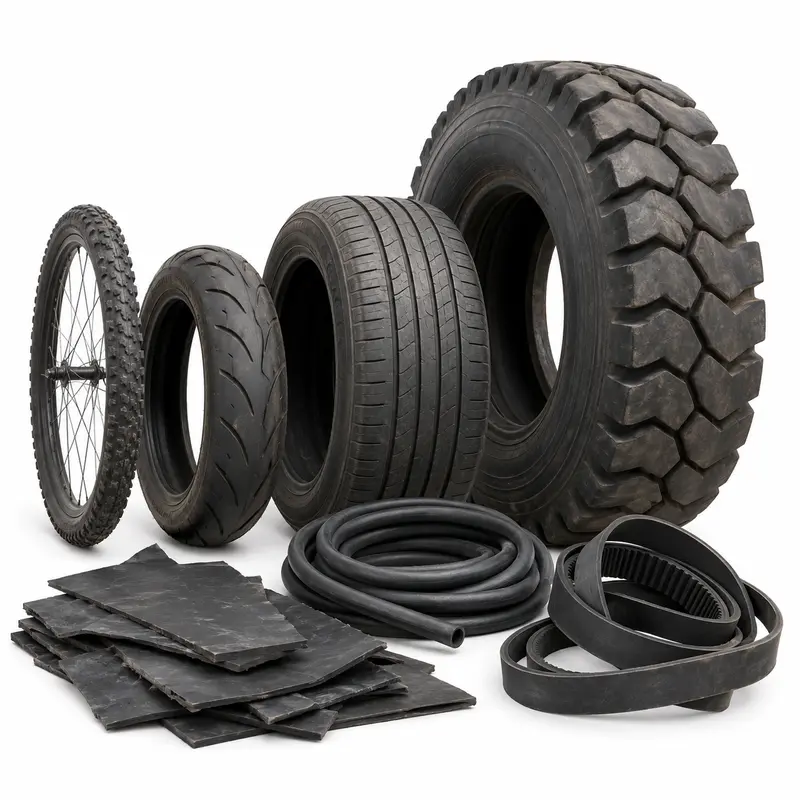
This rubber and tyre scrap guide for Gharuan, Kharar covers the disclosed item or material lot: Distinguish vehicle tyres, bicycle tyres, hoses, belts, sheets or mixed rubber. Rubber requests may include vehicle tyres, bicycle tyres, hoses, belts, sheets or mixed rubber items. For tyres, state the vehicle type, visible size marking where known, count and whether wheels, rims or other parts remain attached. Do not treat every dark flexible product as one rubber grade.
Choose an available material guide for classification and the locality hub for address, ownership and handover planning. Gharuan address and handover guide, Steel Scrap, Industrial Scrap, Plastic Scrap, Rubber and Tyre Scrap, General category guide, and Offer-factor guide. Acceptance depends on the material type, condition, quantity, collection address and selected buyer.
Rubber and Tyre Scrap Details to Record
| Request detail | Details to share |
|---|---|
| Product type | Distinguish vehicle tyres, bicycle tyres, hoses, belts, sheets or mixed rubber. |
| Tyre size | Share visible markings where accessible; mark unknown rather than estimating. |
| Rims and attachments | State whether wheels, metal rims or other parts are included. |
| Condition | Disclose damage, contamination and any relevant reusable condition. |
| Quantity and storage | Count units and describe the actual stack or storage point. |
| Removal | State whether loose or still fitted and who will arrange competent removal. |
Prepare and Confirm the Request
-
Identify the inventory
Record product type, known condition, quantity unit, included components and release authority. Keep retained and separately owned items outside this lot.
-
Locate the stored lot
Provide the complete address and storage position. For Gharuan, the address question is settlement identity, similarly named apartment projects and tenancy ownership. State the actual entrance, floor and handover plan.
-
Compare the same scope
In the BharatBin app, ask participating options about acceptance, inspection, minimum quantity, carrying, specialist work and charges for that disclosed request. Availability is request-dependent.
-
Confirm the inspected outcome
Reconcile the accepted inventory, recorded measurement, agreed rate or item offer, exclusions and charges. Confirm the final payable amount, payment timing and authorised payment recipient before handover.
Pickup-address information
GMADA's historical directory explicitly uses Kharar (Gharuan) for New Model Town Apartment-II and Group Housing, New Town Apartment-1. Gharuan is retained as a named settlement in the supplied Kharar navigation hierarchy; this routing choice does not establish that every premises lies within Kharar's municipal boundary. For rubber and tyre scrap using a Gharuan address, resolve settlement identity, similarly named apartment projects and tenancy ownership alongside product type and tyre size. Retain the settlement name and the complete household or organisation address. Identify the actual unit before discussing a handover; inclusion in the Kharar navigation does not define a municipal boundary or service radius. Keep the product type and tyre size record attached to that owner's rubber and tyre scrap inventory and its actual storage location. The recipient should be able to match the disclosed material or device to the address and distinguish quantity estimates from recorded measurements. New Model Town Apartment-II and New Town Apartment-1 are separate names in the authority record. They also should not be conflated with the separate Model Town locality page. Retain the full project wording, phase or apartment identifier and Gharuan address where that belongs to the actual premises. The practical implication for this rubber and tyre scrap enquiry is to keep the recorded address attached to its approved inventory: for tyres or rubber products, identify count, visible size and attached rims or other components. Keep customer-held wheels separate from the owner's released tyre material, and agree who handles the actual stored lot and what quantity basis applies. Confirm whether inspection will take place at storage or an agreed handover point, with carrying and any specialist preparation stated for that disclosed scope. New Model Town Apartment-II — published address terms: Kharar (Gharuan). The historical directory uses New Model Town Apartment-II and Kharar (Gharuan). This does not establish that an independently addressed property in the Model Town locality is part of that project. Group Housing, New Town Apartment-1 — published address terms: Kharar (Gharuan). The historical directory separately lists Group Housing, New Town Apartment-1 with Kharar (Gharuan). Keep it distinct from New Model Town Apartment-II when describing a unit. If the actual rubber and tyre scrap lot is at a unit matching one of these individual records, retain that record's project, phase and unit on the request and include the product type evidence. At a workshop or household, identify whether tyres are owner-approved scrap, customer property or items under a service arrangement. A vehicle-service booking does not establish a collection route for the discarded tyre lot. Planning example for Gharuan (not a reported collection): a tenant separating personal belongings from provided furniture at an individually identified unit. For this owner's rubber and tyre scrap request, record product type and tyre size for the actual approved inventory and answer the premises question, 'Which full apartment-project name belongs to the unit?' before agreeing an inspection point. Keep an approach pin distinct from the storage position. If another owner has material at the same entrance, keep a separate inventory reference and accepted quantity. Distinguish a tenant's personal items from furnished accommodation, landlord appliances and an organisation's equipment. Where several occupiers have left separate lots, confirm ownership before combining them for inspection. An empty room does not establish that its contents have been released. Confirm this lot's evaluation unit: a defined accepted tyre or rubber-product count, or agreed accepted weight. Then record whether preparation or movement changes what the recipient will inspect.
Material and handling information
Photograph the complete items and disclose storage format and included rims. Do not cut, burn or dismantle tyres to reveal material for a quote. Keep the lot separate from unrelated waste and avoid unsafe stacking or heavy lifting. Ask what collection arrangement is suitable for the actual count and size. A tyre request is not a general vehicle dismantling or waste-burning service. No paid offer is guaranteed, and acceptance may depend on the buyer and appropriate recovery route. A vehicle still fitted with wheels requires separate competent work and permission, not an assumed scrap pickup.
Ask About the Actual Inventory and Premises
Use consistent descriptions and quantity units, then confirm inspected terms.
| Comparison point | What to check |
|---|---|
| Same disclosed inventory | Distinguish vehicle tyres, bicycle tyres, hoses, belts, sheets or mixed rubber. |
| Condition and inclusions | Share visible markings where accessible; mark unknown rather than estimating. |
| Evaluation unit | Ask whether an indication is per tyre, per complete wheel, by accepted weight or on another basis. Identify rim ownership and whether metal and rubber are assessed separately. Confirm collection, loading and any applicable charge without assuming a universal tyre rate. |
| Owner and premises | Distinguish a tenant's personal items from furnished accommodation, landlord appliances and an organisation's equipment. Where several occupiers have left separate lots, confirm ownership before combining them for inspection. An empty room does not establish that its contents have been released. |
| Final amount | Record accepted quantity or items, exclusions, deductions, charges, final payable amount and payment timing. |
Buyer participation for this rubber and tyre scrap request in Gharuan has not been checked against a current request-scoped feed. Use the BharatBin app with the actual inventory, condition, quantity and full premises to review participating options. Confirm acceptance, slot, minimum quantity, carrying responsibility and any charge with the selected option. A published project address supplies identity context, not current collection coverage.
Illustrative Request Example
Illustrative Rubber and Tyre Scrap Request in Gharuan, Kharar
Not a pickup recordThis hypothetical planning example shows information a customer could disclose. It is not a BharatBin pickup record, testimonial, proof of buyer coverage or an observed property-access arrangement.
- Example locality
- Gharuan, Kharar
- Example material
- Example disclosure checklist: Product type: Distinguish vehicle tyres, bicycle tyres, hoses, belts, sheets or mixed rubber. Tyre size: Share visible markings where accessible; mark unknown rather than estimating.
- Quantity details
- Example measurement checklist: Ask whether an indication is per tyre, per complete wheel, by accepted weight or on another basis. Identify rim ownership and whether metal and rubber are assessed separately. Confirm collection, loading and any applicable charge without assuming a universal tyre rate.
- Property access
- Example address checklist for Gharuan, Kharar: GMADA's historical directory explicitly uses Kharar (Gharuan) for New Model Town Apartment-II and Group Housing, New Town Apartment-1. Gharuan is retained as a named settlement in the supplied Kharar navigation hierarchy; this routing choice does not establish that every premises lies within Kharar's municipal boundary.
A participating buyer would still need to confirm acceptance, inspection, the evaluation unit, collection availability, carrying responsibilities, applicable charges and the final offer for the actual request.
This hypothetical example does not establish current buyer coverage, accepted quantities, collection slots, property-entry rules, charges or a fixed rate.
Illustrative Request Example
Rubber and Tyre Scrap planning in Gharuan
Not a pickup recordPlanning example for Gharuan (not a reported collection): a tenant separating personal belongings from provided furniture at an individually identified unit. For this owner's rubber and tyre scrap request, record product type and tyre size for the actual approved inventory and answer the premises question, 'Which full apartment-project name belongs to the unit?' before agreeing an inspection point. Keep an approach pin distinct from the storage position.
If another owner has material at the same entrance, keep a separate inventory reference and accepted quantity. Distinguish a tenant's personal items from furnished accommodation, landlord appliances and an organisation's equipment. Where several occupiers have left separate lots, confirm ownership before combining them for inspection. An empty room does not establish that its contents have been released. Confirm this lot's evaluation unit: a defined accepted tyre or rubber-product count, or agreed accepted weight. Then record whether preparation or movement changes what the recipient will inspect.
This hypothetical planning example does not confirm buyer coverage, material acceptance or collection availability.