Share accurate heavy iron details, compare participating buyers
and confirm classification, collection terms and the final offer.
1
Add Heavy Iron Details
Mention the item types, dimensions, approximate quantity
or weight, condition, attachments and clear photographs of
the heavy iron scrap.
2
Compare Buyer Options
Review participating buyers that may consider the
disclosed heavy iron scrap in your location.
3
Request Pickup
Choose an available collection option and confirm minimum
quantity, access, preparation, dismantling, loading and
any pickup charge.
4
Confirm the Final Offer
The selected buyer confirms acceptance, ferrous
classification, measured weight, deductions, payment and
the final offer after inspection.
Heavy Iron Scrap Pickup and Recycling Guide
Sell
Heavy Iron Scrap
Online
Heavy iron scrap requires accurate dimensions, access
details and a safe loading plan in addition to material
classification. BharatBin helps customers compare
participating buyers and request available collection
options.
Before requesting collection, identify the heavy iron item
types, approximate dimensions and weight, condition,
coatings and non-ferrous or non-metal attachments. Clear
photographs can support a preliminary assessment. Buyers may
consider ferrous grade, section type and thickness,
individual dimensions and weight, corrosion, coatings, oil
or residue, dismantling status, recoverable metal content,
non-metal attachments, site access and lifting or loading
requirements. Information shared before pickup is not a
guaranteed offer; the selected buyer confirms acceptance,
classification and final value after inspection.
Recycling Heavy Iron Scrap
Materials and items that may be recoverable
Heavy ferrous sections can provide substantial recoverable
metal when grade and attachments are understood. Machinery
frames and assemblies may include cast iron, steel, oils,
bearings, concrete or non-ferrous components, so total
item weight may differ from accepted ferrous weight after
inspection.
Household Scrap
Office Scrap
Bulk Quantities
Recyclable Materials
Item acceptance depends on the selected buyer, quantity,
condition and pickup availability.
What to Confirm Before Heavy Iron Scrap Pickup
Check weight, access, equipment and loading
responsibility
Before requesting collection, share each heavy item's
type, dimensions, approximate or known weight, location
within the property, dismantling status, corrosion,
coatings, oil and attached concrete or non-ferrous parts.
Ask the selected buyer to confirm material acceptance,
probable classification, minimum quantity, vehicle and
equipment access, who supplies cutting, lifting and
loading, applicable labour or transport charges, weighing
method, deductions, payment and collection slot.
✓
Accepted Heavy Ferrous Items
✓
Dimensions and Estimated Weight
✓
Dismantling Requirements
✓
Vehicle and Equipment Access
✓
Loading and Pickup Charges
✓
Weight, Deductions and Payment
Share accurate item details before pickup. The selected
buyer confirms acceptance, evaluation terms and the
final offer after inspection.
Arrange Heavy Iron Scrap Pickup
Heavy Iron scrap pickup availability depends on the
customer location, quantity, dimensions, property access
and participating buyers operating nearby. Heavy-material
collection depends strongly on vehicle access, floor or
yard location, lifting equipment, loading responsibility
and whether the item must be safely dismantled before
transport.
Heavy iron scrap may be assessed by ferrous grade, section
thickness, dimensions, measured weight, corrosion, attachments and
loading requirements. Items called heavy iron can include mild
steel, cast iron or mixed machinery components, so the buyer
confirms classification after inspection.
These rate guides are for general reference. The final offer
for heavy iron scrap may depend on ferrous grade, dimensions,
measured weight, corrosion, attachments, dismantling, loading,
location and buyer inspection.
Support Center
Frequently Asked
Questions
Have a question that isn't answered here? Find answers to
common questions about scrap pickup options available through
BharatBin.
What types of heavy iron scrap may participating buyers
consider?
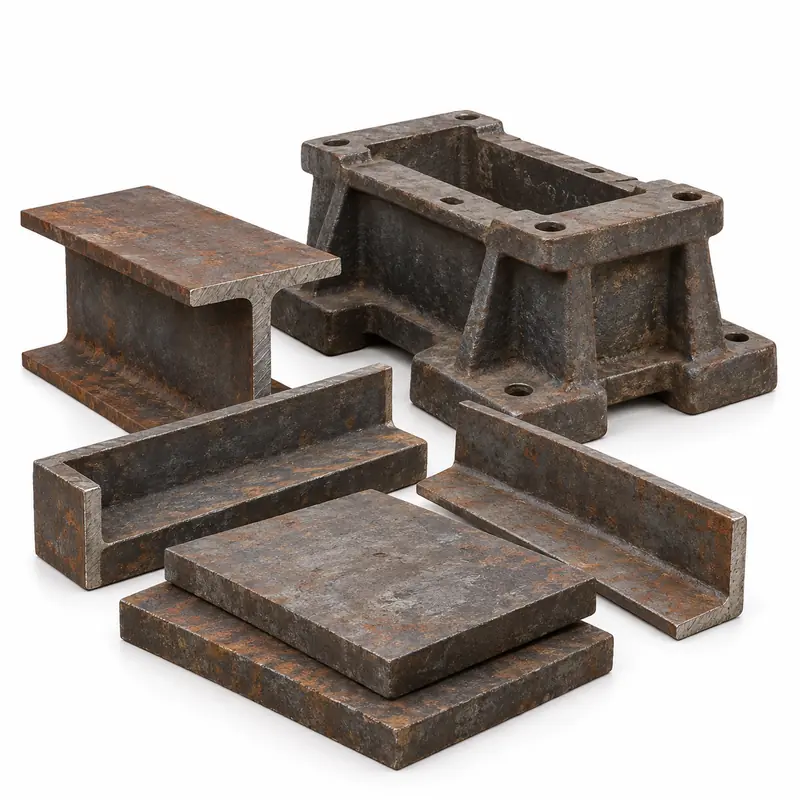
Participating buyers may consider buyer-approved thick plates,
structural beam and channel offcuts, heavy angle sections,
machinery frames, solid ferrous components and dismantled
industrial iron items. Acceptance depends on the exact
material, condition, quantity, site access, location and
selected buyer requirements.
Can rusty or damaged heavy iron scrap be included in a
pickup request?
Some buyers may consider rusty or damaged heavy iron scrap,
but acceptance is not automatic. Share clear photographs and
disclose the condition because evaluation may consider ferrous
grade, section type and thickness, individual dimensions and
weight, corrosion, coatings, oil or residue, dismantling
status, recoverable metal content, non-metal attachments, site
access and lifting or loading requirements.
How are heavy iron scrap offers evaluated?
A buyer may consider ferrous grade, section type and
thickness, individual dimensions and weight, corrosion,
coatings, oil or residue, dismantling status, recoverable
metal content, non-metal attachments, site access and lifting
or loading requirements. Details or photographs shared before
collection are preliminary; the selected buyer confirms
classification, measured weight, deductions and the final
offer after inspection.
How should I prepare heavy iron scrap for pickup?
Provide dimensions, photographs and an estimated or known
weight before collection. Keep access clear, isolate loose
pieces and disclose oil, residue, sharp projections and
unstable assemblies. Do not attempt unsafe lifting, cutting or
dismantling; agree responsibility for equipment, labour and
loading with the selected buyer.
Who is responsible for lifting heavy iron scrap?
Responsibility varies by buyer and site. Share individual
dimensions, estimated weight, access restrictions and floor or
yard location before booking, then obtain clear confirmation
about lifting equipment, labour, loading and any associated
charge.
Is machinery weight treated entirely as iron scrap?
Not automatically. Machinery frames may contain steel, cast
iron, bearings, motors, oils, concrete, rubber or non-ferrous
parts. The selected buyer determines accepted material weight,
classification and deductions after inspection.
Is doorstep pickup always available for heavy iron
scrap?
No. Pickup depends on the customer location, material type,
measured or estimated weight, dimensions, access and
participating buyers operating nearby. One heavy item may
still require a suitable vehicle, lifting plan and buyer
acceptance. Confirm minimum quantity, loading responsibility
and any collection charge before booking.
Can businesses arrange bulk pickup for heavy iron
scrap?
Yes, factories, fabricators, construction contractors,
workshops, warehouses, farms and institutions may request
collection for larger quantities. Provide item types,
dimensions, approximate piece or bundle count, estimated
weight, condition, attachments, site access and preferred
timing so participating buyers can assess the request.
Related Iron Scrap Guides
Explore Related Ferrous Scrap Guides
Review related sorting, pickup and recycling information that
may help you prepare heavy iron scrap and other ferrous
material.