
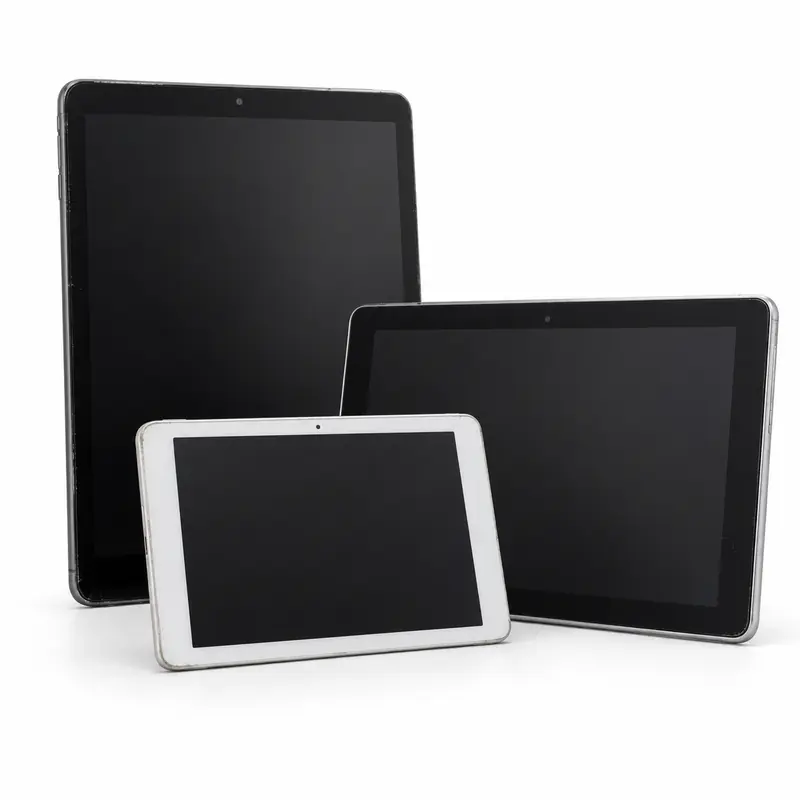
Tablets Guide for Old Kharar, Kharar
This tablets guide for Old Kharar, Kharar covers the disclosed item or material lot: Distinguish tablets, phones and convertible computers. List tablets separately from phones, laptops and convertible computers where the form is known. Give approximate count, relevant models, screen condition and included keyboard covers, pens, cases and adapters. Accessories should not be silently treated as part of every tablet quote. A cracked screen or non-starting unit does not establish successful information removal.
Choose an available material guide for classification and the locality hub for address, ownership and handover planning. Old Kharar address and handover guide, E-Waste, Battery Scrap, Office Scrap, Wire and Cable Scrap, Tablets, General category guide, and Offer-factor guide. Acceptance depends on the material type, condition, quantity, collection address and selected buyer.
Tablets Details to Record
| Request detail | Details to share |
|---|---|
| Device form | Distinguish tablets, phones and convertible computers. |
| Screen and housing | Describe cracks, missing parts and known faults. |
| Accounts and management | Record legitimate release status without credentials. |
| Battery | Disclose visible concerns and obtain suitable handling guidance. |
| Cards and accessories | State retained media, keyboard covers, pens, cases and adapters. |
| Authority | Confirm approval for personally owned and managed devices separately. |
| Complete offered scope | List tablet, charger, keyboard or case only where explicitly offered. Show missing or retained parts separately instead of implying a complete set. |
| Important request distinction | Distinguish owner-approved device release after the responsible data/account process. Confirm acceptance and the evaluation unit for that exact disclosed scope. |
Prepare and Confirm the Request
-
Identify the inventory
Record device form, known condition, quantity unit, included components and release authority. Keep retained and separately owned items outside this lot.
-
Locate the stored lot
Provide the complete address and storage position. For Old Kharar, the address question is precise market or street premises and storage behind an occupied frontage. State the actual entrance, floor and handover plan.
-
Compare the same scope
In the BharatBin app, ask participating options about acceptance, inspection, minimum quantity, carrying, specialist work and charges for that disclosed request. Availability is request-dependent.
-
Confirm the inspected outcome
Reconcile the accepted inventory, recorded measurement, agreed rate or item offer, exclusions and charges. Confirm the final payable amount, payment timing and authorised payment recipient before handover.
Pickup-address information
Old Kharar is retained as a navigation label from the supplied locality inventory. An exact historical-town boundary has not been established here. Use the premises' market, street, property or unit wording together with Kharar and an owner-supplied pin; a broad old-town label should not replace those details. For tablets using a Old Kharar address, resolve precise market or street premises and storage behind an occupied frontage alongside device form and screen and housing. Add the real market, street and premises identifier beneath the broad town label. State whether storage is upstairs, behind a frontage or in another room and confirm the carrying responsibility for that particular route. Keep the device form and screen and housing record attached to that owner's tablets inventory and its actual storage location. The recipient should be able to match the disclosed material or device to the address and distinguish quantity estimates from recorded measurements. A main-market or road landmark may help with approach directions without locating the actual room or store. Avoid assuming that all addresses called Old Kharar share one lane width, vehicle restriction or opening schedule. The seller or property contact should describe the particular entrance and current handover arrangement. The practical implication for this tablets enquiry is to keep the recorded address attached to its approved inventory: for devices, keep the asset count and included accessories tied to the approving owner. Distinguish where inspection happens from who controls account or data release. A buyer seeing a device at one unit does not gain authority over employer, leased or customer equipment stored there. Confirm whether inspection will take place at storage or an agreed handover point, with carrying and any specialist preparation stated for that disclosed scope. No named residential society has been assigned to this locality from the available primary address evidence. Use the actual property address; the Kharar city guide offers separately scoped project references without treating them as nearby societies or collection partners. Planning example for Old Kharar (not a reported collection): a shop operator disclosing an upstairs surplus lot without treating the entire shop as released inventory. For this owner's tablets request, record device form and screen and housing for the actual approved inventory and answer the premises question, 'What market, street and unit details identify the actual premises?' before agreeing an inspection point. Keep an approach pin distinct from the storage position. If another owner has material at the same entrance, keep a separate inventory reference and accepted quantity. A shopkeeper, tenant and property owner can have different rights over stock, furniture and installed fittings. Itemise the approved lot and exclude ongoing business stock, customer goods and another occupier's possessions. The buyer's indication should concern a defined release list rather than the whole premises. Confirm this lot's evaluation unit: a complete device, a documented equipment batch, or agreed accepted recovery material. Then record whether preparation or movement changes what the recipient will inspect.
Material and handling information
The authorised owner should arrange backups, retention, the appropriate data process and legitimate account or management release through product/IT guidance. Review removable cards and mobile-service arrangements where applicable. Record accessories included after that decision. Do not open an unfamiliar bonded assembly or force battery removal; obtain suitable help when condition requires it. Collection does not include account-unlocking, certified information destruction, screen repair or safe removal of damaged built-in batteries. Do not hand over credentials or bypass another owner's controls. A swollen or otherwise visibly damaged device needs product-specific competent handling advice; an ordinary tablet lot does not establish its acceptance.
Ask About the Actual Inventory and Premises
Use consistent descriptions and quantity units, then confirm inspected terms.
| Comparison point | What to check |
|---|---|
| Same disclosed inventory | Distinguish tablets, phones and convertible computers. |
| Condition and inclusions | Describe cracks, missing parts and known faults. |
| Evaluation unit | Agree on per-tablet, disclosed-lot or accepted-weight evaluation with keyboard covers, pens, adapters and retained cards identified. Compare the same released inventory and known condition. Confirm exclusions, inspection changes, any minimum and handling charge before accepting the final offer. |
| Owner and premises | A shopkeeper, tenant and property owner can have different rights over stock, furniture and installed fittings. Itemise the approved lot and exclude ongoing business stock, customer goods and another occupier's possessions. The buyer's indication should concern a defined release list rather than the whole premises. |
| Final amount | Record accepted quantity or items, exclusions, deductions, charges, final payable amount and payment timing. |
Buyer participation for this tablets request in Old Kharar has not been checked against a current request-scoped feed. Use the BharatBin app with the actual inventory, condition, quantity and full premises to review participating options. Confirm acceptance, slot, minimum quantity, carrying responsibility and any charge with the selected option. A published project address supplies identity context, not current collection coverage.
Illustrative Request Example
Illustrative Tablets Request in Old Kharar, Kharar
Not a pickup recordThis hypothetical planning example shows information a customer could disclose. It is not a BharatBin pickup record, testimonial, proof of buyer coverage or an observed property-access arrangement.
- Example locality
- Old Kharar, Kharar
- Example material
- Example disclosure checklist: Device form: Distinguish tablets, phones and convertible computers. Screen and housing: Describe cracks, missing parts and known faults.
- Quantity details
- Example measurement checklist: Agree on per-tablet, disclosed-lot or accepted-weight evaluation with keyboard covers, pens, adapters and retained cards identified. Compare the same released inventory and known condition. Confirm exclusions, inspection changes, any minimum and handling charge before accepting the final offer.
- Property access
- Example address checklist for Old Kharar, Kharar: Old Kharar is retained as a navigation label from the supplied locality inventory. An exact historical-town boundary has not been established here. Use the premises' market, street, property or unit wording together with Kharar and an owner-supplied pin; a broad old-town label should not replace those details.
A participating buyer would still need to confirm acceptance, inspection, the evaluation unit, collection availability, carrying responsibilities, applicable charges and the final offer for the actual request.
This hypothetical example does not establish current buyer coverage, accepted quantities, collection slots, property-entry rules, charges or a fixed rate.
Illustrative Request Example
Tablets planning in Old Kharar
Not a pickup recordPlanning example for Old Kharar (not a reported collection): a shop operator disclosing an upstairs surplus lot without treating the entire shop as released inventory. For this owner's tablets request, record device form and screen and housing for the actual approved inventory and answer the premises question, 'What market, street and unit details identify the actual premises?' before agreeing an inspection point. Keep an approach pin distinct from the storage position.
If another owner has material at the same entrance, keep a separate inventory reference and accepted quantity. A shopkeeper, tenant and property owner can have different rights over stock, furniture and installed fittings. Itemise the approved lot and exclude ongoing business stock, customer goods and another occupier's possessions. The buyer's indication should concern a defined release list rather than the whole premises. Confirm this lot's evaluation unit: a complete device, a documented equipment batch, or agreed accepted recovery material. Then record whether preparation or movement changes what the recipient will inspect.
This hypothetical planning example does not confirm buyer coverage, material acceptance or collection availability.