
Kitchen Equipment Guide for New Sunny Enclave, Kharar
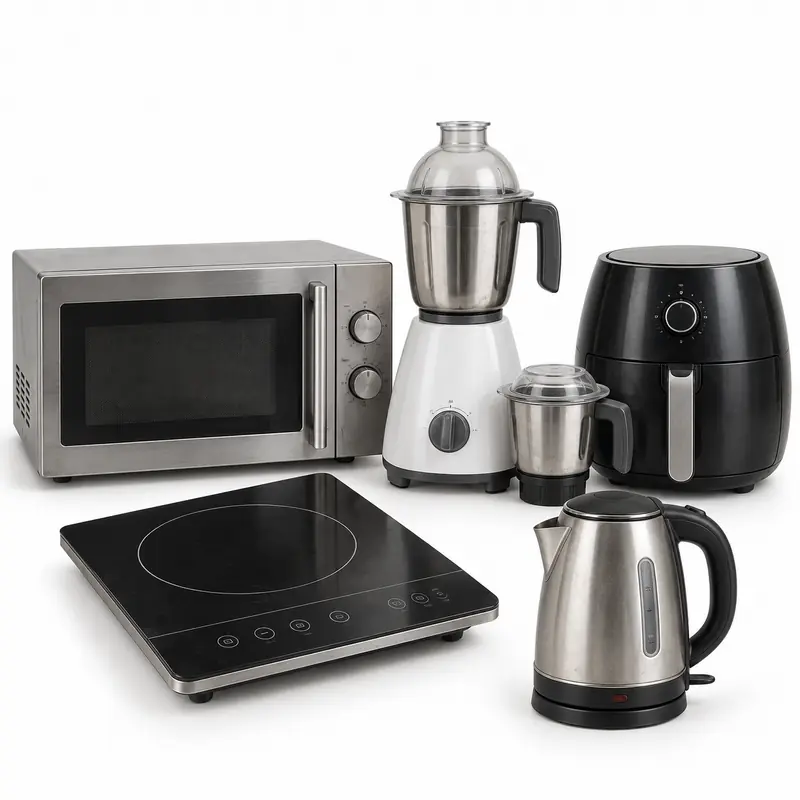
This kitchen equipment guide for New Sunny Enclave, Kharar covers the disclosed item or material lot: Itemise cooking appliances, food-processing devices, chimneys and other equipment. Disclose missing accessories, mixed casing materials and owner-observed condition. Distinguish loose food-preparation appliances, countertop heating equipment and installed kitchen appliances. Bases, jars, baskets, trays, filters and ducts have different inclusion questions; connected water, gas, electricity and property fixtures need appropriate competent preparation. Keep food, consumables and unrelated utensils separate so a kitchen cleanout remains an accountable item-wise request.
Choose an available material guide for classification and the locality hub for address, ownership and handover planning. New Sunny Enclave address and handover guide, Appliances, E-Waste, Furniture, Industrial Scrap, Kitchen Equipment, General category guide, and Offer-factor guide. Acceptance depends on the material type, condition, quantity, collection address and selected buyer.
Kitchen Equipment Details to Record
| Request detail | Details to share |
|---|---|
| Equipment identity | Itemise cooking appliances, food-processing devices, chimneys and other equipment. Disclose missing accessories, mixed casing materials and owner-observed condition. |
| Included units and parts | List named cooking or food-processing devices, drawers, baskets, jars, trays, burners and fitted units only where offered. Identify retained or missing parts explicitly. |
| Known condition | Provide model labels, full-item photographs and actual dimensions for large pieces. Describe current cleanliness and completeness without promising sanitisation or a technical repair diagnosis. |
| Present readiness | A loose small appliance and a fitted kitchen unit require different planning. Confirm who owns the equipment and who is responsible for any competent gas, electrical, plumbing or fixed-mount preparation. |
| Quantity basis | State item count and actual model or dimensions; fitted equipment and loose small devices need separate scope. |
| Evaluation and handling | Compare the same complete item and included accessories, with reuse condition, excluded parts, removal, carrying and any charges made clear. |
Prepare and Confirm the Request
-
Identify the inventory
Record equipment identity, known condition, quantity unit, included components and release authority. Keep retained and separately owned items outside this lot.
-
Locate the stored lot
Provide the complete address and storage position. For New Sunny Enclave, the address question is New Sunny versus Sunny address wording and phase-specific release scope. State the actual entrance, floor and handover plan.
-
Compare the same scope
In the BharatBin app, ask participating options about acceptance, inspection, minimum quantity, carrying, specialist work and charges for that disclosed request. Availability is request-dependent.
-
Confirm the inspected outcome
Reconcile the accepted inventory, recorded measurement, agreed rate or item offer, exclusions and charges. Confirm the final payable amount, payment timing and authorised payment recipient before handover.
Pickup-address information
New Sunny Enclave is a separate navigation label in the supplied Kharar inventory. The readable Kendriya Vihar Phase II reference uses Sunny Enclave and Sector 125 wording, not this exact locality label. Keep the seller's documented project, extension, phase and unit details rather than assigning that reference automatically to New Sunny Enclave. For kitchen equipment using a New Sunny Enclave address, resolve New Sunny versus Sunny address wording and phase-specific release scope alongside equipment identity and included units and parts. Retain the enclave, phase or extension on the actual address, then add the house or project unit. Confirm the current authorised entrance and distinguish an individual lot from shared maintenance material. Keep the equipment identity and included units and parts record attached to that owner's kitchen equipment inventory and its actual storage location. The recipient should be able to match the disclosed material or device to the address and distinguish quantity estimates from recorded measurements. The word New should not be dropped from an address without confirmation. A developer's registered office, a sector reference or a similarly branded project elsewhere does not establish the individual premises' locality. Preserve any fuller address wording provided by the owner and review its source before adding a society association. The practical implication for this kitchen equipment enquiry is to keep the recorded address attached to its approved inventory: for a complete appliance, connect its external dimensions, included assemblies and current connections to the actual exit route. Ask who prepares and carries the named item rather than assuming the recipient will collect every loose component visible nearby. Confirm whether inspection will take place at storage or an agreed handover point, with carrying and any specialist preparation stated for that disclosed scope. No named residential society has been assigned to this locality from the available primary address evidence. Use the actual property address; the Kharar city guide offers separately scoped project references without treating them as nearby societies or collection partners. Planning example for New Sunny Enclave (not a reported collection): a seller identifying their actual extension and unit while separating personal items from a contractor's retained stock. For this owner's kitchen equipment request, record equipment identity and included units and parts for the actual approved inventory and answer the premises question, 'Does the actual address include New, a phase or an extension?' before agreeing an inspection point. Keep an approach pin distinct from the storage position. If another owner has material at the same entrance, keep a separate inventory reference and accepted quantity. Leftover packaging, a resident's old appliance and a contractor's retained material may have different owners. Keep them distinct in the request and confirm authority before combining quantities. New branding is not evidence that construction material is unowned or available. Confirm this lot's evaluation unit: a named complete item, an itemised batch, or agreed accepted material weight. Then record whether preparation or movement changes what the recipient will inspect.
Material and handling information
Small food-preparation appliances. Keep the lot separate from food, kitchen knives and unrelated utensils. Photograph accessible exterior parts and group the owner-approved accessories without exposing sharp edges or attempting repairs. State whether the appliance is already loose and where it is stored. If several kitchen items are offered together, use an item-wise list rather than calling the whole cupboard a single working appliance. Countertop cooking appliances. Describe the appliance after normal safe use has ended, without testing a damaged item merely for a scrap enquiry. Photograph accessible exterior condition and controls; do not open the casing. Say whether the appliance is freestanding, fitted into cabinetry or attached to another installation. Disclose remaining food residue or liquid and agree on appropriate handling before moving the lot to a shared handover point. Installed kitchen equipment. Identify the premises owner, appliance owner and person able to authorise work around cabinets, pipes or ducts. Explain which connections remain in place and where the released appliance will be inspected. Competent preparation, property permission, removal, carrying and handover are separate responsibilities that should be agreed before a collection slot. Accessible photographs are useful; dismantling to expose components is not required for this enquiry. This guide does not include blade handling instructions, electrical repair, motor opening or a food-contact certification. Confirm acceptance of damaged attachments and residue with the buyer; a small-appliance listing is not a promise to clean or repair the equipment. No internal electrical repair, heating-element removal, capacitor discharge or cabinet-removal procedure is provided. A buyer offer does not establish that cleaning, servicing, cabinetry work or certification for reuse is included. Model-specific safe handling remains the owner’s and competent person’s responsibility. No gas, water, electrical or duct disconnection instructions are provided. Fuel cylinders, supply lines and installed services need their own appropriate authorised route. Collection is not automatically a plumbing, gas-fitting, chimney-cleaning or building-reinstatement service.
Ask About the Actual Inventory and Premises
Use consistent descriptions and quantity units, then confirm inspected terms.
| Comparison point | What to check |
|---|---|
| Same disclosed inventory | Itemise cooking appliances, food-processing devices, chimneys and other equipment. Disclose missing accessories, mixed casing materials and owner-observed condition. |
| Condition and inclusions | List named cooking or food-processing devices, drawers, baskets, jars, trays, burners and fitted units only where offered. Identify retained or missing parts explicitly. |
| Evaluation unit | Confirm per-item, set or accepted-weight terms and whether attachments are included in the same offer. Record any incomplete-set assessment, rejected parts and charges. Motor wattage, jar volume and the number of accessories do not establish scrap weight or a guaranteed amount. Agree whether the offer is per unit, for a complete accessory set or based on inspected accepted material. Confirm exclusions and charges in writing where practical. Cooking capacity, advertised wattage and chamber dimensions help identify the appliance but do not prove the accepted weight or final payable amount. Confirm whether evaluation covers the appliance alone or separately listed detached accessories. Agree on labour, specialist work, carrying and any charge, along with the inspected offer basis. Do not treat surrounding fixtures, connected services or the cost of a replacement appliance as part of the accepted scrap amount. |
| Owner and premises | Leftover packaging, a resident's old appliance and a contractor's retained material may have different owners. Keep them distinct in the request and confirm authority before combining quantities. New branding is not evidence that construction material is unowned or available. |
| Final amount | Record accepted quantity or items, exclusions, deductions, charges, final payable amount and payment timing. |
Buyer participation for this kitchen equipment request in New Sunny Enclave has not been checked against a current request-scoped feed. Use the BharatBin app with the actual inventory, condition, quantity and full premises to review participating options. Confirm acceptance, slot, minimum quantity, carrying responsibility and any charge with the selected option. A published project address supplies identity context, not current collection coverage.
Illustrative Request Example
Illustrative Kitchen Equipment Request in New Sunny Enclave, Kharar
Not a pickup recordThis hypothetical planning example shows information a customer could disclose. It is not a BharatBin pickup record, testimonial, proof of buyer coverage or an observed property-access arrangement.
- Example locality
- New Sunny Enclave, Kharar
- Example material
- Example disclosure checklist: Equipment identity: Itemise cooking appliances, food-processing devices, chimneys and other equipment. Disclose missing accessories, mixed casing materials and owner-observed condition. Included units and parts: List named cooking or food-processing devices, drawers, baskets, jars, trays, burners and fitted units only where offered. Identify retained or missing parts explicitly.
- Quantity details
- Example measurement checklist: Confirm per-item, set or accepted-weight terms and whether attachments are included in the same offer. Record any incomplete-set assessment, rejected parts and charges. Motor wattage, jar volume and the number of accessories do not establish scrap weight or a guaranteed amount. Agree whether the offer is per unit, for a complete accessory set or based on inspected accepted material. Confirm exclusions and charges in writing where practical. Cooking capacity, advertised wattage and chamber dimensions help identify the appliance but do not prove the accepted weight or final payable amount. Confirm whether evaluation covers the appliance alone or separately listed detached accessories. Agree on labour, specialist work, carrying and any charge, along with the inspected offer basis. Do not treat surrounding fixtures, connected services or the cost of a replacement appliance as part of the accepted scrap amount.
- Property access
- Example address checklist for New Sunny Enclave, Kharar: New Sunny Enclave is a separate navigation label in the supplied Kharar inventory. The readable Kendriya Vihar Phase II reference uses Sunny Enclave and Sector 125 wording, not this exact locality label. Keep the seller's documented project, extension, phase and unit details rather than assigning that reference automatically to New Sunny Enclave.
A participating buyer would still need to confirm acceptance, inspection, the evaluation unit, collection availability, carrying responsibilities, applicable charges and the final offer for the actual request.
This hypothetical example does not establish current buyer coverage, accepted quantities, collection slots, property-entry rules, charges or a fixed rate.
Illustrative Request Example
Kitchen Equipment planning in New Sunny Enclave
Not a pickup recordPlanning example for New Sunny Enclave (not a reported collection): a seller identifying their actual extension and unit while separating personal items from a contractor's retained stock. For this owner's kitchen equipment request, record equipment identity and included units and parts for the actual approved inventory and answer the premises question, 'Does the actual address include New, a phase or an extension?' before agreeing an inspection point. Keep an approach pin distinct from the storage position.
If another owner has material at the same entrance, keep a separate inventory reference and accepted quantity. Leftover packaging, a resident's old appliance and a contractor's retained material may have different owners. Keep them distinct in the request and confirm authority before combining quantities. New branding is not evidence that construction material is unowned or available. Confirm this lot's evaluation unit: a named complete item, an itemised batch, or agreed accepted material weight. Then record whether preparation or movement changes what the recipient will inspect.
This hypothetical planning example does not confirm buyer coverage, material acceptance or collection availability.