
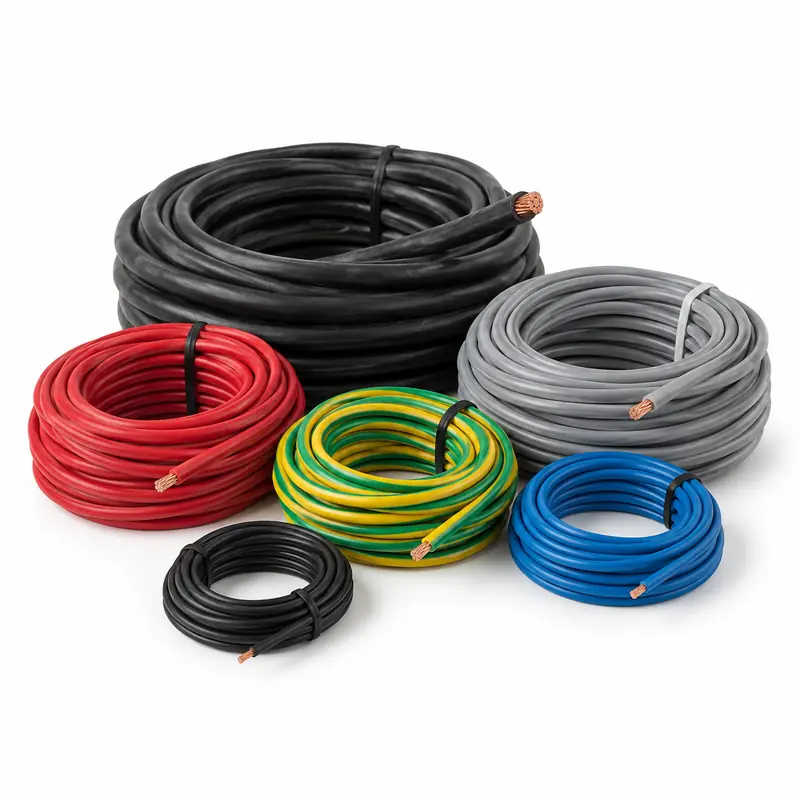
Industrial Cable Scrap Guide for Khanpur, Kharar
This industrial cable scrap guide for Khanpur, Kharar covers the disclosed item or material lot: Labelled reels, offcuts, loose lengths and unknown mixed pieces. Prepare a cable inventory by actual stock group: surplus reels, identifiable offcuts, loose lengths and unknown mixed pieces should remain distinguishable. Share reliable markings or source records for conductor material and construction where available. Include jackets, armour, connectors and drums in the description. Complete cable weight cannot be presented as recoverable copper or aluminium weight, and a contractor's stock is not automatically the property owner's material to sell.
Choose an available material guide for classification and the locality hub for address, ownership and handover planning. Khanpur address and handover guide, Industrial Scrap, Wire and Cable Scrap, Iron Scrap, Steel Scrap, Copper Scrap, Industrial Cable Scrap, General category guide, and Offer-factor guide. Acceptance depends on the material type, condition, quantity, collection address and selected buyer.
Industrial Cable Scrap Details to Record
| Request detail | Details to share |
|---|---|
| Stock groups | Labelled reels, offcuts, loose lengths and unknown mixed pieces. |
| Conductor records | Reliable source or markings and any uncertainty. |
| Construction | Known jackets, armour, cores, connectors and end fittings. |
| Ownership | Stock owner, contractor release and returnable drum exclusions. |
| Location | Actual store, reel dimensions and agreed loading point. |
| Measurement | Per-reel, as-is or accepted-weight terms with drum treatment. |
Prepare and Confirm the Request
-
Identify the inventory
Record stock groups, known condition, quantity unit, included components and release authority. Keep retained and separately owned items outside this lot.
-
Locate the stored lot
Provide the complete address and storage position. For Khanpur, the address question is property identity and separate household, workshop or building lots. State the actual entrance, floor and handover plan.
-
Compare the same scope
In the BharatBin app, ask participating options about acceptance, inspection, minimum quantity, carrying, specialist work and charges for that disclosed request. Availability is request-dependent.
-
Confirm the inspected outcome
Reconcile the accepted inventory, recorded measurement, agreed rate or item offer, exclusions and charges. Confirm the final payable amount, payment timing and authorised payment recipient before handover.
Pickup-address information
Khanpur occurs in several historical PSPCL Kharar area-naming entries. Those entries support the locality label but not a specific project's boundary or the full address of a stored lot. Include the property identifier, any documented project name and the actual entrance. For industrial cable scrap using a Khanpur address, resolve property identity and separate household, workshop or building lots alongside stock groups and conductor records. Add the actual house, plot, workshop or store identifier to the village wording. If a road or village pin is only the approach, identify the final entrance and the storage area separately. Keep the stock groups and conductor records record attached to that owner's industrial cable scrap inventory and its actual storage location. The recipient should be able to match the disclosed material or device to the address and distinguish quantity estimates from recorded measurements. Khanpur wording in a utility list does not make co-listed developments part of Khanpur or show that their inventories are available. A premises on a named road and a separately addressed village property can require different directions. Use the seller's address evidence to choose the applicable label. The practical implication for this industrial cable scrap enquiry is to keep the recorded address attached to its approved inventory: for complete assets, name the current installed or released state and the included equipment. Keep inspection access separate from competent isolation, lifting and residue handling; a road or project address provides no evidence that those site tasks are available. Confirm whether inspection will take place at storage or an agreed handover point, with carrying and any specialist preparation stated for that disclosed scope. No named residential society has been assigned to this locality from the available primary address evidence. Use the actual property address; the Kharar city guide offers separately scoped project references without treating them as nearby societies or collection partners. Planning example for Khanpur (not a reported collection): a workshop operator itemising surplus stock while excluding the landlord's installed fittings. For this owner's industrial cable scrap request, record stock groups and conductor records for the actual approved inventory and answer the premises question, 'Which property and documented address terms apply?' before agreeing an inspection point. Keep an approach pin distinct from the storage position. If another owner has material at the same entrance, keep a separate inventory reference and accepted quantity. Retain separate approvals for personal possessions, workshop inventory and building components. A business operator may be authorised to release stock without owning landlord fittings. List excluded equipment and fixed structures so a buyer's indication concerns only the approved lot. Confirm this lot's evaluation unit: a specified complete asset, approved asset batch, or measured accepted material group. Then record whether preparation or movement changes what the recipient will inspect.
Material and handling information
Photograph already loose owner-approved stock and accessible labels without cutting into live or unidentified installations. Keep drum and reel ownership clear, including any returnable packaging or supplier stock. Do not burn, chemically strip or dismantle cable to match a guessed rate. If any cable remains connected, arrange the proper owner-approved competent release separately before treating it as collectible stock. A stock collection is not permission to remove utility, common-building or active network cable. It does not supply conductor testing, stripping or yield certification. The request must disclose whether material is ready for handover and who controls the premises. Heavy reel movement and loading require an explicitly agreed appropriate scope.
Ask About the Actual Inventory and Premises
Use consistent descriptions and quantity units, then confirm inspected terms.
| Comparison point | What to check |
|---|---|
| Same disclosed inventory | Labelled reels, offcuts, loose lengths and unknown mixed pieces. |
| Condition and inclusions | Reliable source or markings and any uncertainty. |
| Evaluation unit | State how length or weight estimates were obtained and identify drums, jackets and attachments. Agree whether the quote is for as-is cable stock, per reel or an inspected accepted-material basis. Confirm container or drum treatment, recorded measurements, rejected stock and loading charges. Compare offers for the same released cable form instead of multiplying a bare-conductor indication by gross cable weight. |
| Owner and premises | Retain separate approvals for personal possessions, workshop inventory and building components. A business operator may be authorised to release stock without owning landlord fittings. List excluded equipment and fixed structures so a buyer's indication concerns only the approved lot. |
| Final amount | Record accepted quantity or items, exclusions, deductions, charges, final payable amount and payment timing. |
Buyer participation for this industrial cable scrap request in Khanpur has not been checked against a current request-scoped feed. Use the BharatBin app with the actual inventory, condition, quantity and full premises to review participating options. Confirm acceptance, slot, minimum quantity, carrying responsibility and any charge with the selected option. A published project address supplies identity context, not current collection coverage.
Illustrative Request Example
Illustrative Industrial Cable Scrap Request in Khanpur, Kharar
Not a pickup recordThis hypothetical planning example shows information a customer could disclose. It is not a BharatBin pickup record, testimonial, proof of buyer coverage or an observed property-access arrangement.
- Example locality
- Khanpur, Kharar
- Example material
- Example disclosure checklist: Stock groups: Labelled reels, offcuts, loose lengths and unknown mixed pieces. Conductor records: Reliable source or markings and any uncertainty.
- Quantity details
- Example measurement checklist: State how length or weight estimates were obtained and identify drums, jackets and attachments. Agree whether the quote is for as-is cable stock, per reel or an inspected accepted-material basis. Confirm container or drum treatment, recorded measurements, rejected stock and loading charges. Compare offers for the same released cable form instead of multiplying a bare-conductor indication by gross cable weight.
- Property access
- Example address checklist for Khanpur, Kharar: Khanpur occurs in several historical PSPCL Kharar area-naming entries. Those entries support the locality label but not a specific project's boundary or the full address of a stored lot. Include the property identifier, any documented project name and the actual entrance.
A participating buyer would still need to confirm acceptance, inspection, the evaluation unit, collection availability, carrying responsibilities, applicable charges and the final offer for the actual request.
This hypothetical example does not establish current buyer coverage, accepted quantities, collection slots, property-entry rules, charges or a fixed rate.
Illustrative Request Example
Industrial Cable Scrap planning in Khanpur
Not a pickup recordPlanning example for Khanpur (not a reported collection): a workshop operator itemising surplus stock while excluding the landlord's installed fittings. For this owner's industrial cable scrap request, record stock groups and conductor records for the actual approved inventory and answer the premises question, 'Which property and documented address terms apply?' before agreeing an inspection point. Keep an approach pin distinct from the storage position.
If another owner has material at the same entrance, keep a separate inventory reference and accepted quantity. Retain separate approvals for personal possessions, workshop inventory and building components. A business operator may be authorised to release stock without owning landlord fittings. List excluded equipment and fixed structures so a buyer's indication concerns only the approved lot. Confirm this lot's evaluation unit: a specified complete asset, approved asset batch, or measured accepted material group. Then record whether preparation or movement changes what the recipient will inspect.
This hypothetical planning example does not confirm buyer coverage, material acceptance or collection availability.