
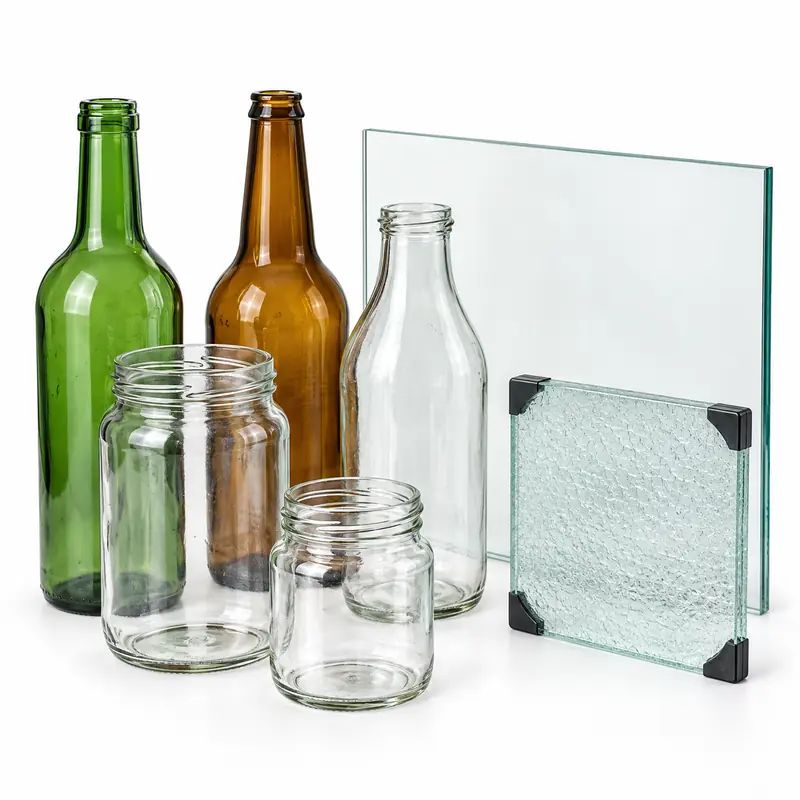
Glass Containers Guide for Jhungian, Kharar
This glass containers guide for Jhungian, Kharar covers the disclosed item or material lot: List jars, containers and separately offered glassware. Identify jars and other offered containers, giving known previous use and included lids or closures. Keep beverage bottles, drinking glasses and unfamiliar heat-resistant or decorative items separately described. Container shape alone does not prove one glass type, clean contents or acceptance for the same processing route.
Choose an available material guide for classification and the locality hub for address, ownership and handover planning. Jhungian address and handover guide, Glass Scrap, Aluminium Scrap, Furniture, Industrial Scrap, Glass Containers, General category guide, and Offer-factor guide. Acceptance depends on the material type, condition, quantity, collection address and selected buyer.
Glass Containers Details to Record
| Request detail | Details to share |
|---|---|
| Inventory | List jars, containers and separately offered glassware. |
| Use | State known prior contents and uncertain residue. |
| Construction | Describe lids, clips, seals and non-glass parts. |
| Condition | Identify intact items and breakage without shard handling. |
| Quantity | Qualify count/weight and box or crate inclusion. |
| Route | Confirm appropriate acceptance, handling and measurement. |
Prepare and Confirm the Request
-
Identify the inventory
Record inventory, known condition, quantity unit, included components and release authority. Keep retained and separately owned items outside this lot.
-
Locate the stored lot
Provide the complete address and storage position. For Jhungian, the address question is village versus road wording and the final turn to storage. State the actual entrance, floor and handover plan.
-
Compare the same scope
In the BharatBin app, ask participating options about acceptance, inspection, minimum quantity, carrying, specialist work and charges for that disclosed request. Availability is request-dependent.
-
Confirm the inspected outcome
Reconcile the accepted inventory, recorded measurement, agreed rate or item offer, exclusions and charges. Confirm the final payable amount, payment timing and authorised payment recipient before handover.
Address checklist
Pickup-address information
Describe the entrance, material location and vehicle access separately when sharing your collection address.
-
Complete address
Locality, society or building, block, unit and postal code.
-
Entry point
Entrance gate, useful landmark and an accurate map pin.
-
Material location
Floor or storage area, and whether the items are loose or installed.
-
Vehicle access
Loading point, parking, lift or stairs and carrying distance.
Read detailed pickup-address guidance Extra guidance on entrances, storage points and access.
Jhungian village and Jhungian or Jhungia Road wording appear in PSPCL's historical Kharar naming record. Keep the distinction between a village property and a road-addressed premises. The seller's complete address and pin should determine which wording is useful. For glass containers using a Jhungian address, resolve village versus road wording and the final turn to storage alongside inventory and use. Clarify whether the address identifies a village property or a road-addressed unit. Identify the final entrance, storage position and owner instead of assigning the lot to another address sharing the road label. Keep the inventory and use record attached to that owner's glass containers inventory and its actual storage location. The recipient should be able to match the disclosed material or device to the address and distinguish quantity estimates from recorded measurements. A road reference is not evidence that every property on that approach belongs to the village label. Likewise, multiple colonies co-listed by the utility should not be assigned automatically to Jhungian. Preserve the premises name, house or business unit and city context when comparing address labels. The practical implication for this glass containers enquiry is to keep the recorded address attached to its approved inventory: for glass, describe intact, framed or broken form and the existing storage arrangement. Ask an accepting recipient about appropriate packaging and movement before choosing a shared handover point. A frame offer should say separately what happens to the glass. Confirm whether inspection will take place at storage or an agreed handover point, with carrying and any specialist preparation stated for that disclosed scope. No named residential society has been assigned to this locality from the available primary address evidence. Use the actual property address; the Kharar city guide offers separately scoped project references without treating them as nearby societies or collection partners. Planning example for Jhungian (not a reported collection): a seller clarifying that a road landmark and the village premises refer to different parts of the address. For this owner's glass containers request, record inventory and use for the actual approved inventory and answer the premises question, 'Is the address a Jhungian village property or road-addressed unit?' before agreeing an inspection point. Keep an approach pin distinct from the storage position. If another owner has material at the same entrance, keep a separate inventory reference and accepted quantity. Do not combine material from different road-side businesses or households merely because one contact can meet a buyer. Record ownership, release authority and accepted quantity by lot. Photographs should distinguish the offered material from stock, fixtures or possessions being retained. Confirm this lot's evaluation unit: the recipient's agreed product count, accepted weight or specified handling basis. Then record whether preparation or movement changes what the recipient will inspect.
Material preparation
Material and handling information
Use safely accessible owner-released stock and photograph representative items in their existing form. Do not open sealed unknown containers, drain chemicals, scrape residues or break jars for a quote. Glass shards can injure handlers; disclose breakage and obtain appropriate handling advice instead of concealing it among intact items. Collection is not decontamination, packaging certification or proof that a vessel can be reused for food. Acceptance of known food jars does not establish a route for medical, chemical or unknown containers. Competent handling and recipient requirements must match the actual prior use and condition.
Ask About the Actual Inventory and Premises
Use consistent descriptions and quantity units, then confirm inspected terms.
| Comparison point | What to check |
|---|---|
| Same disclosed inventory | List jars, containers and separately offered glassware. |
| Condition and inclusions | State known prior contents and uncertain residue. |
| Evaluation unit | Give counts or a qualified weight estimate, with lids, clips, boxes and remaining contents identified. Confirm complete-item versus accepted-glass terms and treatment of containers. Gross lidded-item weight is not automatically payable glass weight, and a crate estimate is not final accepted measurement. |
| Owner and premises | Do not combine material from different road-side businesses or households merely because one contact can meet a buyer. Record ownership, release authority and accepted quantity by lot. Photographs should distinguish the offered material from stock, fixtures or possessions being retained. |
| Final amount | Record accepted quantity or items, exclusions, deductions, charges, final payable amount and payment timing. |
Buyer participation for this glass containers request in Jhungian has not been checked against a current request-scoped feed. Use the BharatBin app with the actual inventory, condition, quantity and full premises to review participating options. Confirm acceptance, slot, minimum quantity, carrying responsibility and any charge with the selected option. A published project address supplies identity context, not current collection coverage.
Illustrative Request Example
Illustrative Glass Containers Request in Jhungian, Kharar
Not a pickup recordThis hypothetical planning example shows information a customer could disclose. It is not a BharatBin pickup record, testimonial, proof of buyer coverage or an observed property-access arrangement.
- Example locality
- Jhungian, Kharar
- Example material
- Example disclosure checklist: Inventory: List jars, containers and separately offered glassware. Use: State known prior contents and uncertain residue.
- Quantity details
- Example measurement checklist: Give counts or a qualified weight estimate, with lids, clips, boxes and remaining contents identified. Confirm complete-item versus accepted-glass terms and treatment of containers. Gross lidded-item weight is not automatically payable glass weight, and a crate estimate is not final accepted measurement.
- Property access
- Example address checklist for Jhungian, Kharar: Jhungian village and Jhungian or Jhungia Road wording appear in PSPCL's historical Kharar naming record. Keep the distinction between a village property and a road-addressed premises. The seller's complete address and pin should determine which wording is useful.
A participating buyer would still need to confirm acceptance, inspection, the evaluation unit, collection availability, carrying responsibilities, applicable charges and the final offer for the actual request.
This hypothetical example does not establish current buyer coverage, accepted quantities, collection slots, property-entry rules, charges or a fixed rate.
Illustrative Request Example
Glass Containers planning in Jhungian
Not a pickup recordPlanning example for Jhungian (not a reported collection): a seller clarifying that a road landmark and the village premises refer to different parts of the address. For this owner's glass containers request, record inventory and use for the actual approved inventory and answer the premises question, 'Is the address a Jhungian village property or road-addressed unit?' before agreeing an inspection point. Keep an approach pin distinct from the storage position.
If another owner has material at the same entrance, keep a separate inventory reference and accepted quantity. Do not combine material from different road-side businesses or households merely because one contact can meet a buyer. Record ownership, release authority and accepted quantity by lot. Photographs should distinguish the offered material from stock, fixtures or possessions being retained. Confirm this lot's evaluation unit: the recipient's agreed product count, accepted weight or specified handling basis. Then record whether preparation or movement changes what the recipient will inspect.
This hypothetical planning example does not confirm buyer coverage, material acceptance or collection availability.