
Light Iron Guide for Kharar
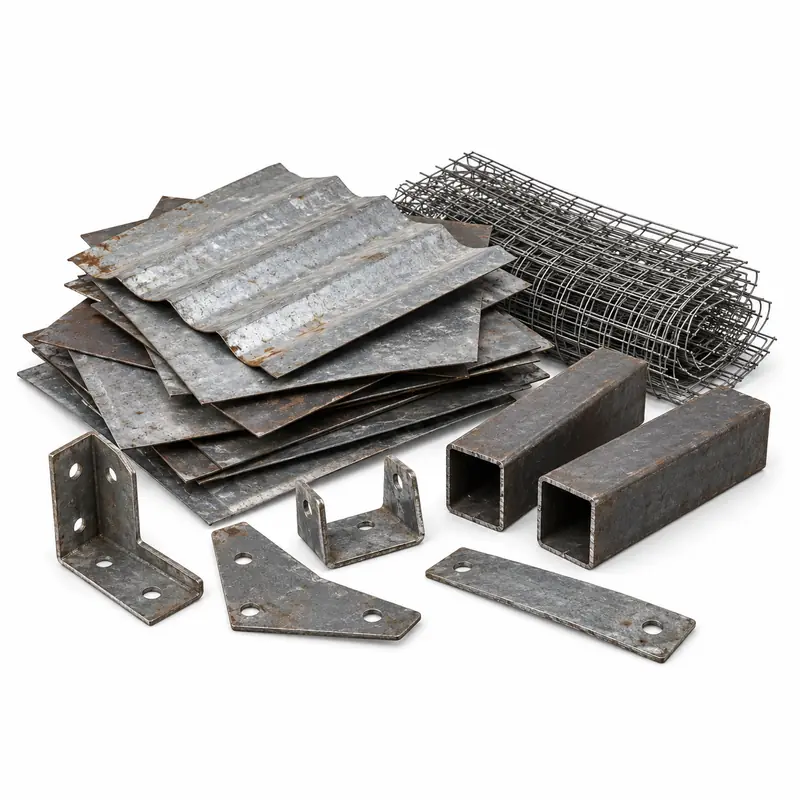
This light iron guide for Kharar covers the disclosed item or material lot: List sheet pieces, frames and empty/unknown housings. Light iron is a broad starting label, not a universal thickness or weight rule. Describe thin sheet pieces, frames, housings and other actual items separately. A bulky volume can contain relatively little metal, and a light-looking assembly can still include electronics, batteries or unknown contents. Do not treat the entire pile as one clean ferrous grade.
Choose an available material guide for classification and the locality hub for address, ownership and handover planning. Kharar address and handover guide, Iron Scrap, Steel Scrap, Industrial Scrap, Furniture, General category guide, and Offer-factor guide. Acceptance depends on the material type, condition, quantity, collection address and selected buyer.
Light Iron Details to Record
| Request detail | Details to share |
|---|---|
| Actual forms | List sheet pieces, frames and empty/unknown housings. |
| Classification | Ask how the buyer defines the actual light-form group. |
| Mixed parts | Disclose plastic, rubber, timber, wire and attachments. |
| Hidden contents | Identify electronics, batteries, sealed objects and uncertainty. |
| Packing | State loose/bagged form and gross estimate basis. |
| Terms | Confirm sorting, accepted weight, minimum and carrying charge. |
Prepare and Confirm the Request
-
Identify the inventory
Record actual forms, known condition, quantity unit, included components and release authority. Keep retained and separately owned items outside this lot.
-
Locate the stored lot
Provide the complete address and storage position. For Kharar, the address question is address label, material classification and release authority. State the actual entrance, floor and handover plan.
-
Compare the same scope
In the BharatBin app, ask participating options about acceptance, inspection, minimum quantity, carrying, specialist work and charges for that disclosed request. Availability is request-dependent.
-
Confirm the inspected outcome
Reconcile the accepted inventory, recorded measurement, agreed rate or item offer, exclusions and charges. Confirm the final payable amount, payment timing and authorised payment recipient before handover.
Address checklist
Pickup-address information
Describe the entrance, material location and vehicle access separately when sharing your collection address.
-
Complete address
Locality, society or building, block, unit and postal code.
-
Entry point
Entrance gate, useful landmark and an accurate map pin.
-
Material location
Floor or storage area, and whether the items are loose or installed.
-
Vehicle access
Loading point, parking, lift or stairs and carrying distance.
Read detailed pickup-address guidance Extra guidance on entrances, storage points and access.
A Kharar address may use a village, colony, project, sector or road label alongside Mohali or SAS Nagar wording. Gillco's published address pairs Gillco Valley with Sector 127 and the Chandigarh–Kharar Highway; other project records use Sector 125, Sector 126 or the Kharar–Landran corridor. Preserve the complete address used for the actual premises instead of treating these labels as interchangeable. For light iron using a Kharar address, resolve address label, material classification and release authority alongside actual forms and classification. Use the complete premises address and one inventory reference even if a sector, village, project and road all describe it. The storage pin, inspection point and collection entrance should refer to that same lot. Keep the actual forms and classification record attached to that owner's light iron inventory and its actual storage location. The recipient should be able to match the disclosed material or device to the address and distinguish quantity estimates from recorded measurements. The locality guides in this collection are navigation choices, not a surveyed municipal boundary. Gharuan remains a separately named settlement in the supplied Kharar hierarchy. Sunny Enclave and New Sunny Enclave are separate labels, and Shivalik City is distinct from the historical Shivalik Avenue reference. One owner and one physical lot should have one request even when several address labels apply. The practical implication for this light iron enquiry is to keep the recorded address attached to its approved inventory: for ferrous pieces, disclose the longest or heaviest known form and non-metal attachments alongside the actual storage position. Agree the measurement and loading scope for released loose material, keeping installed railings or structural parts out of the ready lot. Confirm whether inspection will take place at storage or an agreed handover point, with carrying and any specialist preparation stated for that disclosed scope. Use the Kharar locality hub to compare the recorded project, sector, village and road terms for the actual premises. Its society and project references identify addresses; they do not establish the location of this offered lot or current collection coverage. Keep the material's physical specification independent of its address label. Planning example for Kharar (not a reported collection): a seller preparing one household lot while a separate business has a separately owned clear-out. For this owner's light iron request, record actual forms and classification for the actual approved inventory and answer the premises question, 'Which address label identifies the actual premises?' before agreeing an inspection point. Keep an approach pin distinct from the storage position. If another owner has material at the same entrance, keep a separate inventory reference and accepted quantity. Separate household possessions, landlord fittings, tenant property, organisational assets and common-area material. A resident can disclose their own lot; an organisation or society needs a named person authorised to release its inventory. Keep different owners' measurement records and payments separate. Confirm this lot's evaluation unit: recorded accepted weight by inspected ferrous group or a defined whole-lot offer. Then record whether preparation or movement changes what the recipient will inspect.
Material preparation
Material and handling information
Identify the authorised loose lot and keep safely available similar pieces together without crushing or unfamiliar dismantling. Photograph contents and mixed construction honestly. Do not open sealed items, strip installed equipment or place battery-containing devices among ordinary light metal to simplify the description. Collection is not general rubbish clearance, container opening, electronics dismantling or proof that an assembly is safely empty. Unknown residues and pressure-containing objects require a suitable separate decision. No light-iron label guarantees acceptance of every household item.
Ask About the Actual Inventory and Premises
Use consistent descriptions and quantity units, then confirm inspected terms.
| Comparison point | What to check |
|---|---|
| Same disclosed inventory | List sheet pieces, frames and empty/unknown housings. |
| Condition and inclusions | Ask how the buyer defines the actual light-form group. |
| Evaluation unit | Volume, bags and piece counts describe packing, not accepted metal weight. Agree on containers, mixed parts, sorting and exclusions, and ask about minimum quantity and carrying charges. Compare the same accepted groups rather than applying a clean-metal indication to an undisclosed mixed pile. |
| Owner and premises | Separate household possessions, landlord fittings, tenant property, organisational assets and common-area material. A resident can disclose their own lot; an organisation or society needs a named person authorised to release its inventory. Keep different owners' measurement records and payments separate. |
| Final amount | Record accepted quantity or items, exclusions, deductions, charges, final payable amount and payment timing. |
Buyer participation for this light iron request in Kharar has not been checked against a current request-scoped feed. Use the BharatBin app with the actual inventory, condition, quantity and full premises to review participating options. Confirm acceptance, slot, minimum quantity, carrying responsibility and any charge with the selected option. A published project address supplies identity context, not current collection coverage.
Illustrative Request Example
Illustrative Light Iron Request in Kharar
Not a pickup recordThis hypothetical planning example shows information a customer could disclose. It is not a BharatBin pickup record, testimonial, proof of buyer coverage or an observed property-access arrangement.
- Example locality
- Kharar
- Example material
- Example disclosure checklist: Actual forms: List sheet pieces, frames and empty/unknown housings. Classification: Ask how the buyer defines the actual light-form group.
- Quantity details
- Example measurement checklist: Volume, bags and piece counts describe packing, not accepted metal weight. Agree on containers, mixed parts, sorting and exclusions, and ask about minimum quantity and carrying charges. Compare the same accepted groups rather than applying a clean-metal indication to an undisclosed mixed pile.
- Property access
- Example address checklist for Kharar: A Kharar address may use a village, colony, project, sector or road label alongside Mohali or SAS Nagar wording. Gillco's published address pairs Gillco Valley with Sector 127 and the Chandigarh–Kharar Highway; other project records use Sector 125, Sector 126 or the Kharar–Landran corridor. Preserve the complete address used for the actual premises instead of treating these labels as interchangeable.
A participating buyer would still need to confirm acceptance, inspection, the evaluation unit, collection availability, carrying responsibilities, applicable charges and the final offer for the actual request.
This hypothetical example does not establish current buyer coverage, accepted quantities, collection slots, property-entry rules, charges or a fixed rate.
Illustrative Request Example
Light Iron planning in Kharar
Not a pickup recordPlanning example for Kharar (not a reported collection): a seller preparing one household lot while a separate business has a separately owned clear-out. For this owner's light iron request, record actual forms and classification for the actual approved inventory and answer the premises question, 'Which address label identifies the actual premises?' before agreeing an inspection point. Keep an approach pin distinct from the storage position.
If another owner has material at the same entrance, keep a separate inventory reference and accepted quantity. Separate household possessions, landlord fittings, tenant property, organisational assets and common-area material. A resident can disclose their own lot; an organisation or society needs a named person authorised to release its inventory. Keep different owners' measurement records and payments separate. Confirm this lot's evaluation unit: recorded accepted weight by inspected ferrous group or a defined whole-lot offer. Then record whether preparation or movement changes what the recipient will inspect.
This hypothetical planning example does not confirm buyer coverage, material acceptance or collection availability.