
Laundry Equipment Guide for Gharuan, Kharar
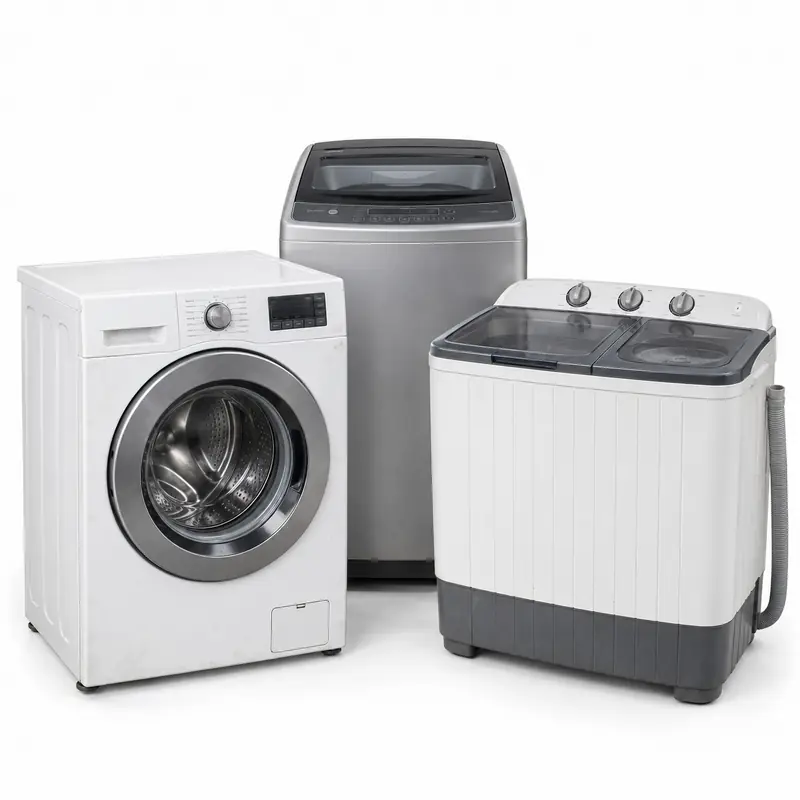
This laundry equipment guide for Gharuan, Kharar covers the disclosed item or material lot: Identify front-load, top-load, semi-automatic or other known form, capacity and owner-observed condition. List hoses, lids and accessories that are actually included. Identify front-load, top-load and semi-automatic appliances and describe the actual compartments, doors, drums and accessories. Stacked or fitted equipment and loose machines need different connection and exit-route disclosures. Clothes, detergent and unrelated plumbing are separate lots. A rated washing capacity is not the machine’s accepted weight, a fixed rate or proof that both washing and drying functions work.
Choose an available material guide for classification and the locality hub for address, ownership and handover planning. Gharuan address and handover guide, Appliances, E-Waste, Furniture, Industrial Scrap, Laundry Equipment, General category guide, and Offer-factor guide. Acceptance depends on the material type, condition, quantity, collection address and selected buyer.
Laundry Equipment Details to Record
| Request detail | Details to share |
|---|---|
| Equipment identity | Identify front-load, top-load, semi-automatic or other known form, capacity and owner-observed condition. List hoses, lids and accessories that are actually included. |
| Included units and parts | List each machine, drums or tubs, lids, controls and supplied hoses or other accessories. Identify retained or missing parts explicitly. |
| Known condition | Show the whole machine, readable labels, visible damage and the actual storage floor. Capacity in kilograms describes its rated load, not a weighed material quantity. |
| Present readiness | For a washing-machine replacement or move-out, distinguish a personally owned item from a landlord-supplied machine. Explain whether it remains connected and who will make it ready for the agreed handover. |
| Quantity basis | State machine count and readable rated load; washing capacity in kilograms is not the appliance's scrap weight. |
| Evaluation and handling | Ask about the per-item or material basis, missing parts, preparation, carrying and final inspected amount. Do not equate a working machine's reuse indication with an incomplete recovery lot. |
Prepare and Confirm the Request
-
Identify the inventory
Record equipment identity, known condition, quantity unit, included components and release authority. Keep retained and separately owned items outside this lot.
-
Locate the stored lot
Provide the complete address and storage position. For Gharuan, the address question is settlement identity, similarly named apartment projects and tenancy ownership. State the actual entrance, floor and handover plan.
-
Compare the same scope
In the BharatBin app, ask participating options about acceptance, inspection, minimum quantity, carrying, specialist work and charges for that disclosed request. Availability is request-dependent.
-
Confirm the inspected outcome
Reconcile the accepted inventory, recorded measurement, agreed rate or item offer, exclusions and charges. Confirm the final payable amount, payment timing and authorised payment recipient before handover.
Pickup-address information
GMADA's historical directory explicitly uses Kharar (Gharuan) for New Model Town Apartment-II and Group Housing, New Town Apartment-1. Gharuan is retained as a named settlement in the supplied Kharar navigation hierarchy; this routing choice does not establish that every premises lies within Kharar's municipal boundary. For laundry equipment using a Gharuan address, resolve settlement identity, similarly named apartment projects and tenancy ownership alongside equipment identity and included units and parts. Retain the settlement name and the complete household or organisation address. Identify the actual unit before discussing a handover; inclusion in the Kharar navigation does not define a municipal boundary or service radius. Keep the equipment identity and included units and parts record attached to that owner's laundry equipment inventory and its actual storage location. The recipient should be able to match the disclosed material or device to the address and distinguish quantity estimates from recorded measurements. New Model Town Apartment-II and New Town Apartment-1 are separate names in the authority record. They also should not be conflated with the separate Model Town locality page. Retain the full project wording, phase or apartment identifier and Gharuan address where that belongs to the actual premises. The practical implication for this laundry equipment enquiry is to keep the recorded address attached to its approved inventory: for a complete appliance, connect its external dimensions, included assemblies and current connections to the actual exit route. Ask who prepares and carries the named item rather than assuming the recipient will collect every loose component visible nearby. Confirm whether inspection will take place at storage or an agreed handover point, with carrying and any specialist preparation stated for that disclosed scope. New Model Town Apartment-II — published address terms: Kharar (Gharuan). The historical directory uses New Model Town Apartment-II and Kharar (Gharuan). This does not establish that an independently addressed property in the Model Town locality is part of that project. Group Housing, New Town Apartment-1 — published address terms: Kharar (Gharuan). The historical directory separately lists Group Housing, New Town Apartment-1 with Kharar (Gharuan). Keep it distinct from New Model Town Apartment-II when describing a unit. If the actual laundry equipment lot is at a unit matching one of these individual records, retain that record's project, phase and unit on the request and include the equipment identity evidence. For a replacement or move-out, state the item's present floor and connections. Establish who will make it ready, who will carry it, and whether the quoted amount includes those tasks. Do not assume property fixtures belong to the occupant. Planning example for Gharuan (not a reported collection): a tenant separating personal belongings from provided furniture at an individually identified unit. For this owner's laundry equipment request, record equipment identity and included units and parts for the actual approved inventory and answer the premises question, 'Which full apartment-project name belongs to the unit?' before agreeing an inspection point. Keep an approach pin distinct from the storage position. If another owner has material at the same entrance, keep a separate inventory reference and accepted quantity. Distinguish a tenant's personal items from furnished accommodation, landlord appliances and an organisation's equipment. Where several occupiers have left separate lots, confirm ownership before combining them for inspection. An empty room does not establish that its contents have been released. Confirm this lot's evaluation unit: a named complete item, an itemised batch, or agreed accepted material weight. Then record whether preparation or movement changes what the recipient will inspect.
Material and handling information
Laundry equipment. Describe the stored position, floor and route before arranging removal. State whether the appliance is installed under a counter, connected to water or drainage, stacked, fixed to another appliance or already loose. Photographs should show accessible exterior condition and connections without opening panels. Assign any competent disconnection and removal responsibilities explicitly; a buyer indication does not automatically include a plumber, technician, extra carrying labour or repairs. No electrical work, drain disconnection, internal component removal or lifting procedure is provided. Do not run an appliance merely to demonstrate condition when a fault or installation issue makes testing uncertain. Confirm the owner’s release and the suitable handling of remaining liquid or damaged parts.
Ask About the Actual Inventory and Premises
Use consistent descriptions and quantity units, then confirm inspected terms.
| Comparison point | What to check |
|---|---|
| Same disclosed inventory | Identify front-load, top-load, semi-automatic or other known form, capacity and owner-observed condition. List hoses, lids and accessories that are actually included. |
| Condition and inclusions | List each machine, drums or tubs, lids, controls and supplied hoses or other accessories. Identify retained or missing parts explicitly. |
| Evaluation unit | Ask whether evaluation is for an intact appliance, reusable parts or accepted measured material. Record included accessories, excluded connections, measurement method and collection or carrying charges. Drum size and rated clothes capacity are not a substitute for agreed measurement and an inspected final offer. |
| Owner and premises | Distinguish a tenant's personal items from furnished accommodation, landlord appliances and an organisation's equipment. Where several occupiers have left separate lots, confirm ownership before combining them for inspection. An empty room does not establish that its contents have been released. |
| Final amount | Record accepted quantity or items, exclusions, deductions, charges, final payable amount and payment timing. |
Buyer participation for this laundry equipment request in Gharuan has not been checked against a current request-scoped feed. Use the BharatBin app with the actual inventory, condition, quantity and full premises to review participating options. Confirm acceptance, slot, minimum quantity, carrying responsibility and any charge with the selected option. A published project address supplies identity context, not current collection coverage.
Illustrative Request Example
Illustrative Laundry Equipment Request in Gharuan, Kharar
Not a pickup recordThis hypothetical planning example shows information a customer could disclose. It is not a BharatBin pickup record, testimonial, proof of buyer coverage or an observed property-access arrangement.
- Example locality
- Gharuan, Kharar
- Example material
- Example disclosure checklist: Equipment identity: Identify front-load, top-load, semi-automatic or other known form, capacity and owner-observed condition. List hoses, lids and accessories that are actually included. Included units and parts: List each machine, drums or tubs, lids, controls and supplied hoses or other accessories. Identify retained or missing parts explicitly.
- Quantity details
- Example measurement checklist: Ask whether evaluation is for an intact appliance, reusable parts or accepted measured material. Record included accessories, excluded connections, measurement method and collection or carrying charges. Drum size and rated clothes capacity are not a substitute for agreed measurement and an inspected final offer.
- Property access
- Example address checklist for Gharuan, Kharar: GMADA's historical directory explicitly uses Kharar (Gharuan) for New Model Town Apartment-II and Group Housing, New Town Apartment-1. Gharuan is retained as a named settlement in the supplied Kharar navigation hierarchy; this routing choice does not establish that every premises lies within Kharar's municipal boundary.
A participating buyer would still need to confirm acceptance, inspection, the evaluation unit, collection availability, carrying responsibilities, applicable charges and the final offer for the actual request.
This hypothetical example does not establish current buyer coverage, accepted quantities, collection slots, property-entry rules, charges or a fixed rate.
Illustrative Request Example
Laundry Equipment planning in Gharuan
Not a pickup recordPlanning example for Gharuan (not a reported collection): a tenant separating personal belongings from provided furniture at an individually identified unit. For this owner's laundry equipment request, record equipment identity and included units and parts for the actual approved inventory and answer the premises question, 'Which full apartment-project name belongs to the unit?' before agreeing an inspection point. Keep an approach pin distinct from the storage position.
If another owner has material at the same entrance, keep a separate inventory reference and accepted quantity. Distinguish a tenant's personal items from furnished accommodation, landlord appliances and an organisation's equipment. Where several occupiers have left separate lots, confirm ownership before combining them for inspection. An empty room does not establish that its contents have been released. Confirm this lot's evaluation unit: a named complete item, an itemised batch, or agreed accepted material weight. Then record whether preparation or movement changes what the recipient will inspect.
This hypothetical planning example does not confirm buyer coverage, material acceptance or collection availability.