
Rubber and Tyre Scrap Guide for Dashmesh Nagar, Kharar
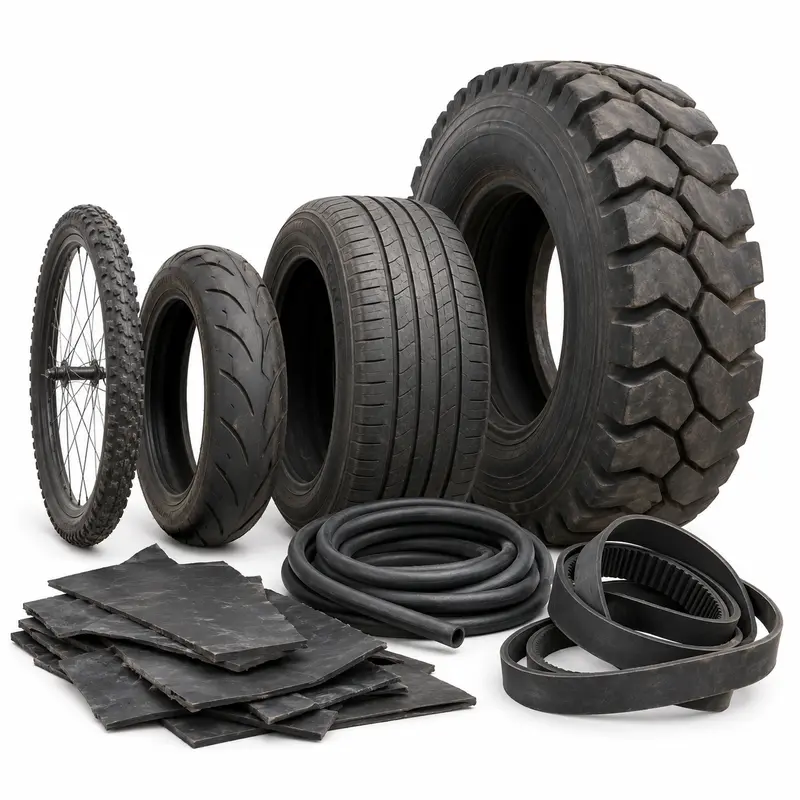
This rubber and tyre scrap guide for Dashmesh Nagar, Kharar covers the disclosed item or material lot: Distinguish vehicle tyres, bicycle tyres, hoses, belts, sheets or mixed rubber. Rubber requests may include vehicle tyres, bicycle tyres, hoses, belts, sheets or mixed rubber items. For tyres, state the vehicle type, visible size marking where known, count and whether wheels, rims or other parts remain attached. Do not treat every dark flexible product as one rubber grade.
Choose an available material guide for classification and the locality hub for address, ownership and handover planning. Dashmesh Nagar address and handover guide, Steel Scrap, Industrial Scrap, Plastic Scrap, Rubber and Tyre Scrap, General category guide, and Offer-factor guide. Acceptance depends on the material type, condition, quantity, collection address and selected buyer.
Rubber and Tyre Scrap Details to Record
| Request detail | Details to share |
|---|---|
| Product type | Distinguish vehicle tyres, bicycle tyres, hoses, belts, sheets or mixed rubber. |
| Tyre size | Share visible markings where accessible; mark unknown rather than estimating. |
| Rims and attachments | State whether wheels, metal rims or other parts are included. |
| Condition | Disclose damage, contamination and any relevant reusable condition. |
| Quantity and storage | Count units and describe the actual stack or storage point. |
| Removal | State whether loose or still fitted and who will arrange competent removal. |
Prepare and Confirm the Request
-
Identify the inventory
Record product type, known condition, quantity unit, included components and release authority. Keep retained and separately owned items outside this lot.
-
Locate the stored lot
Provide the complete address and storage position. For Dashmesh Nagar, the address question is individual household identity within a colony address. State the actual entrance, floor and handover plan.
-
Compare the same scope
In the BharatBin app, ask participating options about acceptance, inspection, minimum quantity, carrying, specialist work and charges for that disclosed request. Availability is request-dependent.
-
Confirm the inspected outcome
Reconcile the accepted inventory, recorded measurement, agreed rate or item offer, exclusions and charges. Confirm the final payable amount, payment timing and authorised payment recipient before handover.
Address checklist
Pickup-address information
Describe the entrance, material location and vehicle access separately when sharing your collection address.
-
Complete address
Locality, society or building, block, unit and postal code.
-
Entry point
Entrance gate, useful landmark and an accurate map pin.
-
Material location
Floor or storage area, and whether the items are loose or installed.
-
Vehicle access
Loading point, parking, lift or stairs and carrying distance.
Read detailed pickup-address guidance Extra guidance on entrances, storage points and access.
Dashmesh Nagar appears by name in the historical PSPCL Kharar City record. The record is a locality-naming reference rather than a street plan or society directory. Give the house, building or business unit and the street wording used on the real premises address. For rubber and tyre scrap using a Dashmesh Nagar address, resolve individual household identity within a colony address alongside product type and tyre size. Give the colony, street or block and actual property number. Where occupiers share an entrance, identify the releasing owner's unit and storage position so inspection does not cover another occupier's material. Keep the product type and tyre size record attached to that owner's rubber and tyre scrap inventory and its actual storage location. The recipient should be able to match the disclosed material or device to the address and distinguish quantity estimates from recorded measurements. The utility list also contains roads and other colonies in the same operational entries. Their co-occurrence does not locate a particular house or prove that a named project belongs to Dashmesh Nagar. Retain the colony label alongside the unit-level address rather than substituting a nearby project name. The practical implication for this rubber and tyre scrap enquiry is to keep the recorded address attached to its approved inventory: for tyres or rubber products, identify count, visible size and attached rims or other components. Keep customer-held wheels separate from the owner's released tyre material, and agree who handles the actual stored lot and what quantity basis applies. Confirm whether inspection will take place at storage or an agreed handover point, with carrying and any specialist preparation stated for that disclosed scope. No named residential society has been assigned to this locality from the available primary address evidence. Use the actual property address; the Kharar city guide offers separately scoped project references without treating them as nearby societies or collection partners. Planning example for Dashmesh Nagar (not a reported collection): two households using the same entrance but maintaining separate lots and payment records. For this owner's rubber and tyre scrap request, record product type and tyre size for the actual approved inventory and answer the premises question, 'Which household or business unit owns the lot?' before agreeing an inspection point. Keep an approach pin distinct from the storage position. If another owner has material at the same entrance, keep a separate inventory reference and accepted quantity. Keep each household's lot identifiable when a shared premises contact coordinates requests. Mark retained possessions and rented appliances separately. A collective photograph or one gate contact should not become blanket permission to remove every item visible there. Confirm this lot's evaluation unit: a defined accepted tyre or rubber-product count, or agreed accepted weight. Then record whether preparation or movement changes what the recipient will inspect.
Material preparation
Material and handling information
Photograph the complete items and disclose storage format and included rims. Do not cut, burn or dismantle tyres to reveal material for a quote. Keep the lot separate from unrelated waste and avoid unsafe stacking or heavy lifting. Ask what collection arrangement is suitable for the actual count and size. A tyre request is not a general vehicle dismantling or waste-burning service. No paid offer is guaranteed, and acceptance may depend on the buyer and appropriate recovery route. A vehicle still fitted with wheels requires separate competent work and permission, not an assumed scrap pickup.
Ask About the Actual Inventory and Premises
Use consistent descriptions and quantity units, then confirm inspected terms.
| Comparison point | What to check |
|---|---|
| Same disclosed inventory | Distinguish vehicle tyres, bicycle tyres, hoses, belts, sheets or mixed rubber. |
| Condition and inclusions | Share visible markings where accessible; mark unknown rather than estimating. |
| Evaluation unit | Ask whether an indication is per tyre, per complete wheel, by accepted weight or on another basis. Identify rim ownership and whether metal and rubber are assessed separately. Confirm collection, loading and any applicable charge without assuming a universal tyre rate. |
| Owner and premises | Keep each household's lot identifiable when a shared premises contact coordinates requests. Mark retained possessions and rented appliances separately. A collective photograph or one gate contact should not become blanket permission to remove every item visible there. |
| Final amount | Record accepted quantity or items, exclusions, deductions, charges, final payable amount and payment timing. |
Buyer participation for this rubber and tyre scrap request in Dashmesh Nagar has not been checked against a current request-scoped feed. Use the BharatBin app with the actual inventory, condition, quantity and full premises to review participating options. Confirm acceptance, slot, minimum quantity, carrying responsibility and any charge with the selected option. A published project address supplies identity context, not current collection coverage.
Illustrative Request Example
Illustrative Rubber and Tyre Scrap Request in Dashmesh Nagar, Kharar
Not a pickup recordThis hypothetical planning example shows information a customer could disclose. It is not a BharatBin pickup record, testimonial, proof of buyer coverage or an observed property-access arrangement.
- Example locality
- Dashmesh Nagar, Kharar
- Example material
- Example disclosure checklist: Product type: Distinguish vehicle tyres, bicycle tyres, hoses, belts, sheets or mixed rubber. Tyre size: Share visible markings where accessible; mark unknown rather than estimating.
- Quantity details
- Example measurement checklist: Ask whether an indication is per tyre, per complete wheel, by accepted weight or on another basis. Identify rim ownership and whether metal and rubber are assessed separately. Confirm collection, loading and any applicable charge without assuming a universal tyre rate.
- Property access
- Example address checklist for Dashmesh Nagar, Kharar: Dashmesh Nagar appears by name in the historical PSPCL Kharar City record. The record is a locality-naming reference rather than a street plan or society directory. Give the house, building or business unit and the street wording used on the real premises address.
A participating buyer would still need to confirm acceptance, inspection, the evaluation unit, collection availability, carrying responsibilities, applicable charges and the final offer for the actual request.
This hypothetical example does not establish current buyer coverage, accepted quantities, collection slots, property-entry rules, charges or a fixed rate.
Illustrative Request Example
Rubber and Tyre Scrap planning in Dashmesh Nagar
Not a pickup recordPlanning example for Dashmesh Nagar (not a reported collection): two households using the same entrance but maintaining separate lots and payment records. For this owner's rubber and tyre scrap request, record product type and tyre size for the actual approved inventory and answer the premises question, 'Which household or business unit owns the lot?' before agreeing an inspection point. Keep an approach pin distinct from the storage position.
If another owner has material at the same entrance, keep a separate inventory reference and accepted quantity. Keep each household's lot identifiable when a shared premises contact coordinates requests. Mark retained possessions and rented appliances separately. A collective photograph or one gate contact should not become blanket permission to remove every item visible there. Confirm this lot's evaluation unit: a defined accepted tyre or rubber-product count, or agreed accepted weight. Then record whether preparation or movement changes what the recipient will inspect.
This hypothetical planning example does not confirm buyer coverage, material acceptance or collection availability.