
E-Waste Guide for Dashmesh Nagar, Kharar
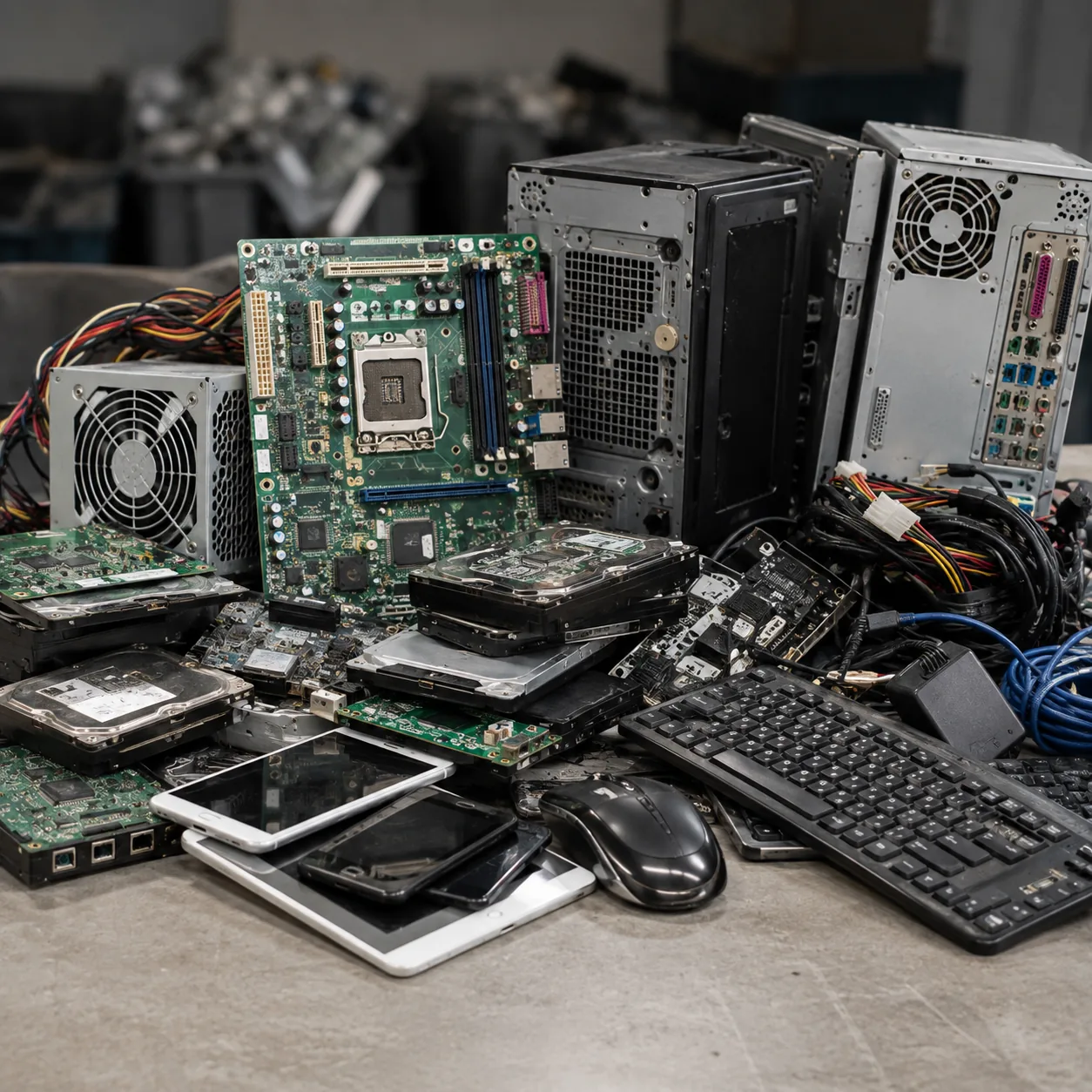
This e-waste guide for Dashmesh Nagar, Kharar covers the disclosed item or material lot: List types, models and counts without combining unlike electronics into an unexplained total. E-waste requests may include phones, computers, laptops, monitors, networking devices, printers and other unwanted electronics. List devices individually or by a clearly described group, including model where available, condition, accessories and missing parts. A reusable device, a repairable device and a dismantled board lot can require different evaluations and collection routes.
Choose an available material guide for classification and the locality hub for address, ownership and handover planning. Dashmesh Nagar address and handover guide, Battery Scrap, Office Scrap, Wire and Cable Scrap, E-Waste, General category guide, and Offer-factor guide. Acceptance depends on the material type, condition, quantity, collection address and selected buyer.
E-Waste Details to Record
| Request detail | Details to share |
|---|---|
| Device inventory | List types, models and counts without combining unlike electronics into an unexplained total. |
| Condition | State working, faulty or unknown status and visible damage; avoid presenting a guess as a test result. |
| Accessories and components | Disclose chargers, cables, remotes, missing boards or other included/absent parts. |
| Data-bearing equipment | Identify phones, drives or computers requiring your own suitable data-removal process. |
| Batteries and displays | Disclose damaged batteries, broken screens and old display types separately. |
| Organisational approval | For business devices, confirm ownership, release authority and required recycling or data documentation. |
Prepare and Confirm the Request
-
Identify the inventory
Record device inventory, known condition, quantity unit, included components and release authority. Keep retained and separately owned items outside this lot.
-
Locate the stored lot
Provide the complete address and storage position. For Dashmesh Nagar, the address question is individual household identity within a colony address. State the actual entrance, floor and handover plan.
-
Compare the same scope
In the BharatBin app, ask participating options about acceptance, inspection, minimum quantity, carrying, specialist work and charges for that disclosed request. Availability is request-dependent.
-
Confirm the inspected outcome
Reconcile the accepted inventory, recorded measurement, agreed rate or item offer, exclusions and charges. Confirm the final payable amount, payment timing and authorised payment recipient before handover.
Pickup-address information
Dashmesh Nagar appears by name in the historical PSPCL Kharar City record. The record is a locality-naming reference rather than a street plan or society directory. Give the house, building or business unit and the street wording used on the real premises address. For e-waste using a Dashmesh Nagar address, resolve individual household identity within a colony address alongside device inventory and condition. Give the colony, street or block and actual property number. Where occupiers share an entrance, identify the releasing owner's unit and storage position so inspection does not cover another occupier's material. Keep the device inventory and condition record attached to that owner's e-waste inventory and its actual storage location. The recipient should be able to match the disclosed material or device to the address and distinguish quantity estimates from recorded measurements. The utility list also contains roads and other colonies in the same operational entries. Their co-occurrence does not locate a particular house or prove that a named project belongs to Dashmesh Nagar. Retain the colony label alongside the unit-level address rather than substituting a nearby project name. The practical implication for this e-waste enquiry is to keep the recorded address attached to its approved inventory: for devices, keep the asset count and included accessories tied to the approving owner. Distinguish where inspection happens from who controls account or data release. A buyer seeing a device at one unit does not gain authority over employer, leased or customer equipment stored there. Confirm whether inspection will take place at storage or an agreed handover point, with carrying and any specialist preparation stated for that disclosed scope. No named residential society has been assigned to this locality from the available primary address evidence. Use the actual property address; the Kharar city guide offers separately scoped project references without treating them as nearby societies or collection partners. Planning example for Dashmesh Nagar (not a reported collection): two households using the same entrance but maintaining separate lots and payment records. For this owner's e-waste request, record device inventory and condition for the actual approved inventory and answer the premises question, 'Which household or business unit owns the lot?' before agreeing an inspection point. Keep an approach pin distinct from the storage position. If another owner has material at the same entrance, keep a separate inventory reference and accepted quantity. Keep each household's lot identifiable when a shared premises contact coordinates requests. Mark retained possessions and rented appliances separately. A collective photograph or one gate contact should not become blanket permission to remove every item visible there. Confirm this lot's evaluation unit: a complete device, a documented equipment batch, or agreed accepted recovery material. Then record whether preparation or movement changes what the recipient will inspect.
Material and handling information
Use the manufacturer's suitable account-removal and data-erasure guidance for the actual device and keep personal information out of listing photographs. Include cords or accessories only when they belong to the lot. Do not energise damaged equipment, open batteries, break screens or dismantle circuit assemblies to demonstrate recoverable material. Ask about an appropriate electronics collection and recycling route, particularly for damaged batteries, old displays or business data-bearing equipment. A participating buyer's general listing is not proof of authorisation for every waste stream or a certificate of secure destruction. Obtain relevant documentation where your organisation requires it.
Ask About the Actual Inventory and Premises
Use consistent descriptions and quantity units, then confirm inspected terms.
| Comparison point | What to check |
|---|---|
| Same disclosed inventory | List types, models and counts without combining unlike electronics into an unexplained total. |
| Condition and inclusions | State working, faulty or unknown status and visible damage; avoid presenting a guess as a test result. |
| Evaluation unit | Compare offers for the same device inventory and evaluation basis. Clarify per-device versus material-weight indications, missing accessories, data-service charges, collection costs and inspection conditions. A count of electronic devices does not establish their combined metal value or final payout. |
| Owner and premises | Keep each household's lot identifiable when a shared premises contact coordinates requests. Mark retained possessions and rented appliances separately. A collective photograph or one gate contact should not become blanket permission to remove every item visible there. |
| Final amount | Record accepted quantity or items, exclusions, deductions, charges, final payable amount and payment timing. |
Buyer participation for this e-waste request in Dashmesh Nagar has not been checked against a current request-scoped feed. Use the BharatBin app with the actual inventory, condition, quantity and full premises to review participating options. Confirm acceptance, slot, minimum quantity, carrying responsibility and any charge with the selected option. A published project address supplies identity context, not current collection coverage.
Illustrative Request Example
Illustrative E-Waste Request in Dashmesh Nagar, Kharar
Not a pickup recordThis hypothetical planning example shows information a customer could disclose. It is not a BharatBin pickup record, testimonial, proof of buyer coverage or an observed property-access arrangement.
- Example locality
- Dashmesh Nagar, Kharar
- Example material
- Example disclosure checklist: Device inventory: List types, models and counts without combining unlike electronics into an unexplained total. Condition: State working, faulty or unknown status and visible damage; avoid presenting a guess as a test result.
- Quantity details
- Example measurement checklist: Compare offers for the same device inventory and evaluation basis. Clarify per-device versus material-weight indications, missing accessories, data-service charges, collection costs and inspection conditions. A count of electronic devices does not establish their combined metal value or final payout.
- Property access
- Example address checklist for Dashmesh Nagar, Kharar: Dashmesh Nagar appears by name in the historical PSPCL Kharar City record. The record is a locality-naming reference rather than a street plan or society directory. Give the house, building or business unit and the street wording used on the real premises address.
A participating buyer would still need to confirm acceptance, inspection, the evaluation unit, collection availability, carrying responsibilities, applicable charges and the final offer for the actual request.
This hypothetical example does not establish current buyer coverage, accepted quantities, collection slots, property-entry rules, charges or a fixed rate.
Illustrative Request Example
E-Waste planning in Dashmesh Nagar
Not a pickup recordPlanning example for Dashmesh Nagar (not a reported collection): two households using the same entrance but maintaining separate lots and payment records. For this owner's e-waste request, record device inventory and condition for the actual approved inventory and answer the premises question, 'Which household or business unit owns the lot?' before agreeing an inspection point. Keep an approach pin distinct from the storage position.
If another owner has material at the same entrance, keep a separate inventory reference and accepted quantity. Keep each household's lot identifiable when a shared premises contact coordinates requests. Mark retained possessions and rented appliances separately. A collective photograph or one gate contact should not become blanket permission to remove every item visible there. Confirm this lot's evaluation unit: a complete device, a documented equipment batch, or agreed accepted recovery material. Then record whether preparation or movement changes what the recipient will inspect.
This hypothetical planning example does not confirm buyer coverage, material acceptance or collection availability.