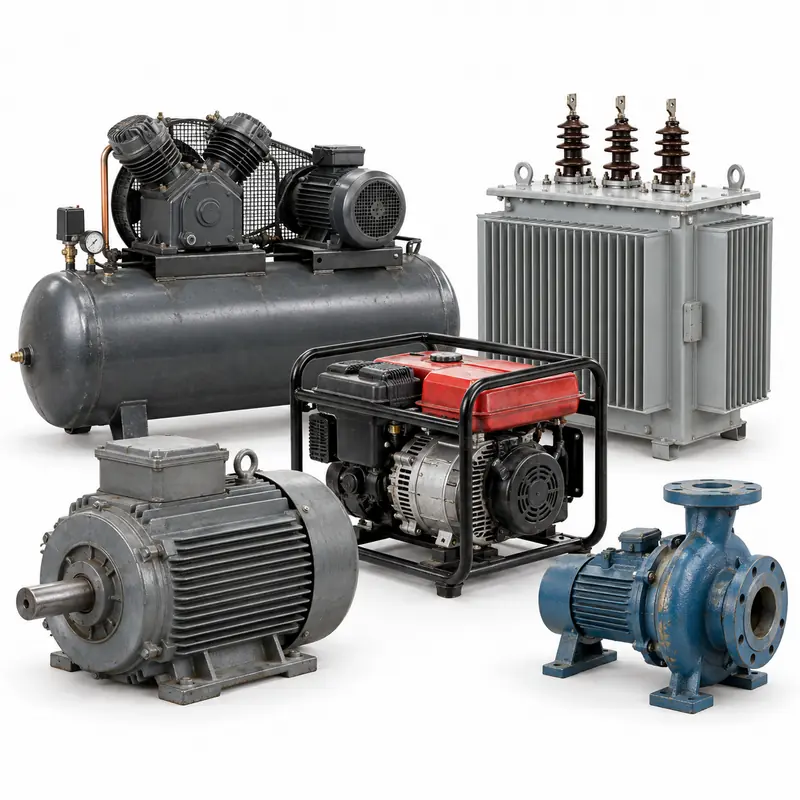
Old Commercial and Industrial Equipment
Scrap Pickup Options
Review accepted equipment, condition, completeness,
preparation, removal and buyer-evaluation factors for
commercial and industrial equipment before requesting an
available pickup option.
Request Commercial and Industrial Equipment Scrap Pickup in
4 Simple Steps
Share accurate equipment details, compare participating buyers and
confirm preparation, collection and final inspection terms for
commercial and industrial equipment.
1
Add Equipment Details
List the exact types, quantity, specifications where
known, working condition, missing parts and clear
photographs of the commercial and industrial equipment.
2
Compare Buyer Options
Review participating buyers that may accept the disclosed
equipment in your location and confirm any
minimum-quantity requirement.
3
Request Pickup
Choose an available slot and confirm preparation,
disconnection, access, dismantling, carrying, loading and
collection charges in advance.
4
Confirm the Final Offer
The selected buyer confirms acceptance, classification,
measured quantity, deductions, payment and the final offer
after inspection.
Old Commercial and Industrial Equipment Scrap Pickup and
Recycling Guide
Sell
Commercial and Industrial Equipment Scrap
Online
Old commercial and industrial equipment can retain reuse
value and recoverable electronic, metal, glass or plastic
components. BharatBin helps households and businesses
compare participating buyer options and request collection
where available without promising acceptance or a fixed
price.
Before requesting collection, identify the exact equipment
types, approximate quantity, specifications, working
condition, missing parts, installation status and access.
Clear photographs may support a preliminary assessment.
Participating buyers may consider equipment type,
manufacturer or model, power or capacity rating, age,
operating condition, motor or winding condition, missing
parts, fluids or contamination, electrical isolation,
dimensions, weight, installation, lifting needs, quantity
and site access. Details shared before pickup are not a
guaranteed offer; the selected buyer confirms acceptance,
classification, deductions and final value after inspection.
Recycling Commercial and Industrial Equipment Scrap
Materials and items that may be recoverable
Industrial equipment can contain heavy steel or iron,
copper or aluminium windings, electrical controls, cables,
oils, refrigerants, batteries and mixed components.
Suitable decommissioning and material recovery depend on
the exact asset and contamination; do not dismantle
energised or pressurised equipment.
Household Scrap
Office Scrap
Bulk Quantities
Recyclable Materials
Item acceptance depends on the selected buyer, quantity,
condition and pickup availability.
What to Confirm Before Commercial and Industrial
Equipment Scrap Pickup
Check isolation, fluids, dismantling and heavy-load
terms
Before requesting collection, share the exact equipment
types, count, brand or model, specifications where known,
working condition, missing parts, installation status,
dimensions, photographs and pickup access. Relevant
evaluation factors include equipment type, manufacturer or
model, power or capacity rating, age, operating condition,
motor or winding condition, missing parts, fluids or
contamination, electrical isolation, dimensions, weight,
installation, lifting needs, quantity and site access.
Follow this preparation guidance: Prepare an equipment
inventory with ratings, dimensions, estimated weight and
photographs. Isolate all energy sources through qualified
personnel, disclose oil, fuel, coolant, refrigerant,
batteries or hazardous contamination, and agree who
handles dismantling, draining, crane or forklift loading
and transport. Ask the selected buyer to confirm accepted
items, minimum quantity, inspection or measurement method,
disconnection and dismantling responsibility, carrying or
loading requirements, pickup slot, labour and transport
charges, deductions, payment method and available handover
or recycling documentation before collection.
✓
Accepted Industrial Equipment
✓
Ratings, Condition and Completeness
✓
Isolation, Fluids and Contamination
✓
Dismantling and Site Responsibility
✓
Lifting, Loading and Charges
✓
Inspection, Payment and Records
Share accurate item details before pickup. The selected
buyer confirms acceptance, evaluation terms and the
final offer after inspection.
Arrange Commercial and Industrial Equipment Scrap Pickup
Pickup availability for commercial and industrial
equipment depends on customer location, quantity,
dimensions, property or commercial-site access and
participating buyers operating nearby. Commercial sites
may require permits, shutdown windows, contractor
induction, loading-bay access, lifting plans and
documentation confirmed before a collection slot can be
offered. Minimum quantities, time slots and charges can
differ by buyer.
Old commercial and industrial equipment can combine reusable
equipment and recoverable e-waste, copper, aluminium, iron, steel,
plastic components. Material form, attachments and contamination
vary substantially by appliance. Use these guides for general
reference; participating buyers may assess intact equipment by
type, specifications, condition, completeness, safe-removal needs
and reuse potential rather than by applying separate material
rates to the appliance's full weight.
These rate guides are for general reference. The final offer
for commercial and industrial equipment may depend on equipment
type, manufacturer or model, power or capacity rating, age,
operating condition, motor or winding condition, missing parts,
fluids or contamination, electrical isolation, dimensions,
weight, installation, lifting needs, quantity and site access,
quantity, location, removal or loading requirements and buyer
inspection.
Support Center
Frequently Asked
Questions
Have a question that isn't answered here? Find answers to
common questions about scrap pickup options available through
BharatBin.
What types of commercial and industrial equipment may
participating buyers consider?
Participating buyers may consider air compressors, electric
motors, generators, transformers, water pumps, commercial
refrigeration units, machinery, electrical panels, fabrication
equipment and comparable industrial assets. Acceptance depends
on the exact equipment type, condition, completeness,
quantity, location, access and selected buyer requirements; a
listed example is not an acceptance guarantee.
Can non-working or incomplete commercial and industrial
equipment be included?
Some participating buyers may consider non-working or
incomplete equipment, but acceptance is not automatic. Share
clear photographs and disclose missing parts, damage or unsafe
conditions because evaluation may consider equipment type,
manufacturer or model, power or capacity rating, age,
operating condition, motor or winding condition, missing
parts, fluids or contamination, electrical isolation,
dimensions, weight, installation, lifting needs, quantity and
site access.
How are commercial and industrial equipment pickup offers
evaluated?
A buyer may consider equipment type, manufacturer or model,
power or capacity rating, age, operating condition, motor or
winding condition, missing parts, fluids or contamination,
electrical isolation, dimensions, weight, installation,
lifting needs, quantity and site access. Photographs or
details shared before collection support only a preliminary
assessment; the selected buyer confirms classification,
deductions, measured quantity and the final offer after
inspection.
How should I prepare commercial and industrial equipment
for pickup?
Prepare an equipment inventory with ratings, dimensions,
estimated weight and photographs. Isolate all energy sources
through qualified personnel, disclose oil, fuel, coolant,
refrigerant, batteries or hazardous contamination, and agree
who handles dismantling, draining, crane or forklift loading
and transport.
Who should isolate and decommission industrial
equipment?
Qualified site personnel or competent contractors should
isolate electrical, hydraulic, pneumatic, fuel, refrigerant
and stored-energy systems. Confirm the exact work scope,
permits and responsibility before collection; buyer pickup
does not automatically include decommissioning.
How are oil, fuel, refrigerant or contaminated parts
handled?
Disclose every fluid and contamination risk in advance. Do not
drain, vent or transfer regulated material unless authorised
procedures and suitable containment are available. The
selected buyer may refuse unsafe, leaking or undocumented
equipment.
Is doorstep pickup always available for commercial and
industrial equipment?
No. Pickup depends on location, equipment type, quantity,
dimensions, condition, access and participating buyers
operating nearby. Large machines can be assessed individually,
while loose parts or smaller equipment may be grouped by type,
quantity and loading requirements. Confirm minimum quantity,
collection slot, access responsibility and every charge before
booking.
Can businesses arrange bulk pickup for commercial and
industrial equipment?
Yes, factories, workshops, warehouses, hotels, commercial
buildings, farms, institutions and facility managers may
request collection for multiple units or larger assets.
Provide an itemised inventory, ratings where relevant,
condition, dimensions, photographs, safety requirements, site
access, loading needs and preferred timing so participating
buyers can assess the request.
Related Appliance Guides
Explore Related Appliance Pickup Guides
Review related item-level guides that may help you identify,
prepare and request pickup for commercial and industrial
equipment.
Ready to Request Pickup for
Old Commercial and Industrial Equipment?
Share the equipment type, condition, quantity and access details,
compare participating buyers and request an available collection
option for commercial and industrial equipment.